By Lynn Purdon Yenkey, Midlands Education Chairperson
June, when the push of summer flowers invites back in the tiny bees, solitary wasps, and elegant butterflies we’ve missed, is, naturally, Pollinator Month. While sun-loving, showy species get well-deserved attention, let’s not overlook the contributions of lesser-loved nocturnal insects. Moths turn out to be both efficient pollination partners for a host of plants and are themselves an essential source of food within ecosystems. In the U.S., sphinx moths stand out. You may know them as hummingbird moths.
First, moths are simply abundant! According to the US Forest Service, about 11,000 moth species occur in the United States, compared to about 750 butterfly species. Thinking about Doug Tallamy’s chickadee study showing that bird parents use 6,000 – 9,000 caterpillars to raise a brood of chicks, it follows that the bulk of those are likely moth larvae. Worldwide there are about 160,000 moth species, and potentially thousands yet unknown. As Dr. Eric Lopresti related in his presentation to the Midlands Chapter, new species have recently been added to South Carolina’s moth checklist, revealed by gardeners using iNaturalist. The example he showed is the gaudy sphinx (Eumorpha labruscae). Yes, it’s a pollinator.
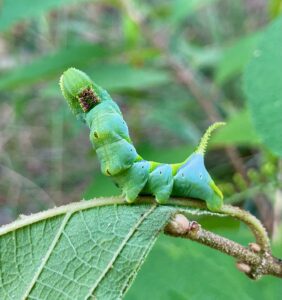
Rustic sphinx moth caterpillar on alert
The moniker “sphinx” came from the way the caterpillars rear up defensively and tuck their head in a posture something like the Great Sphinx of Giza. Carl Linnaeus named the Sphinx genus in his 1758 10th edition of Systema Naturae. The Sphingidae family contains about 1,500 species worldwide. The Butterflies and Moths of North America project documents 43 species in South Carolina.
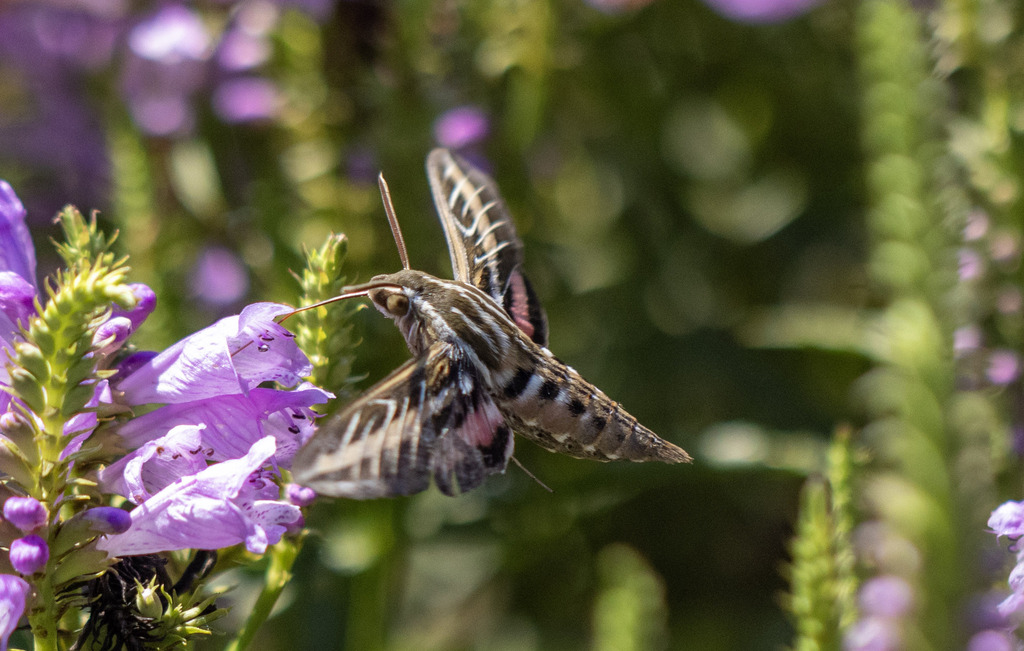
Adult sphinx moths are huge and agile, appearing to swing in the air from flower to flower. They’re fast, powerful fliers with narrow wings, earning another name, hawk moths. Hovering like hummingbirds, they unfurl a long tubular mouthpart (proboscis) to drink nectar from inside long fluted flowers.
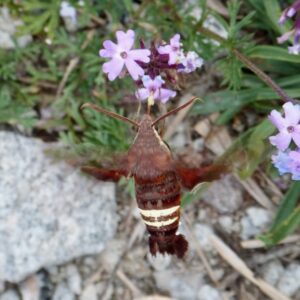
Nessus sphinx
Some of the clearwings in the genus Hemaris are called hummingbird moths for their flying style and olive-green fuzzy bodies. The snowberry clearwing (Hemaris diffinis) looks like that and mimics a bumblebee with black and yellow abdominal segments! The Nessus sphinx (Amphion floridensis) is another bee mimic, sporting two bright yellow abdominal stripes, flying during the day to nectar on colorful blooms right alongside the bumblebees. It’s pictured here.
Gardeners who have had tomatoes, potatoes, or Nicotiana eaten by caterpillars of Carolina sphinx moths (Manduca) will know them by another name, hornworms, for the horn-like structure on these beefy caterpillars. Some species can cause damage to gardens and farms, but sphinx moths are also doing the hard work of ensuring flowering plants persist, and keeping some vanishingly rare plants from extinction.
Only about 1,500 ethereal ghost orchids (Dendrophylax lindenii) remain in Florida swamps. Until recently scientists thought the giant sphinx moth (Cocytius antaeus), with its 11-inch proboscis, was the orchid’s pollinator partner. But an experiment using complex photography showed a surprise: the smaller fig sphinx moth (Pachylia ficus) doing the pollinating, with the giant nectaring without transferring pollen. Other sphinx moths with shorter proboscises may pollinate it, too. We are still learning so much about moths!
The most important moth pollinator in North America, according to Dr. Lopresti, is Hyles lineata, the white-lined sphinx moth. Adult moths seek out nectar from many many kinds of flowers, and favorites include columbine (Aquilegia), evening primrose (Oenothera), larkspur (Delphinium), Petunia, honeysuckle (Lonicera), moonvine (Ipomoea), lilac (Syringa), clover (Trifolium), thistle (Cirsium) and Jimson weed (Datura). Unlike bees that collect pollen purposefully, sphinx moths collect it incidentally when their legs and wings brush against flowers. Searching for food at night is no problem; sphinx moths use olfactory senses to find nectar-rich flowers, and happen to “possess the most acute color vision of any animals, discriminating floral colors at light intensities that would appear pitch black to the human eye.”⁺
Females seek out evening primrose to lay eggs on, but are documented using nearly 50 other genera. This diversity may explain why the white-lined sphinx is not considered a serious garden pest. Other larval host plants include four o’clock (Mirabilis), apple (Malus), elm (Ulmus), grape (Vitis), honeysuckle (Lonicera), cherry (Prunus), tomato (Lycopersicon), and willow (Salix). When caterpillars are ready to pupate, they climb down and burrow a few inches below the soil. Adults emerge about a week later, and can live a week and potentially to 30 days.
You can find white-lined sphinx moths throughout most of the U.S. in unconfined areas like fields, forest edges, open forests, deserts, and suburban gardens. Their largest populations are in the Southwest. This moth is by no means rare, but a NatureServe analysis suggests that it has declined substantially in the Southeast. Like all of South Carolina’s pollinators, the white-lined sphinx and its moth kin could use more people gardening with native plants and practices that safeguard their lifecycles.
Here are a few to keep in mind for Pollinator Month and beyond:
- Do not use pesticides in the garden, even mosquito fogging labeled as “repellant.”
- Leave the leaves under trees and in flower beds to protect moths and other species that pupate in the soil.
- Make a puddler as a water source.
- Grow native plants with flowers of different shapes, especially tubular flowers, with plants blooming spring through fall.
- Turn off the lights at night! Light pollution isn’t helping moths, fireflies, migrating birds, and other animals distracted by it.
- Get to know a new-to-you sphinx moth and other moths too!
South Carolina Butterfly Checklist
-
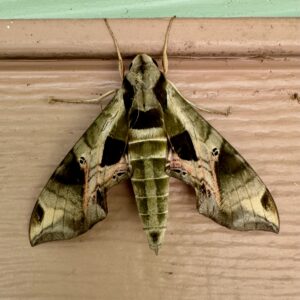
- Pandorus sphinx
-
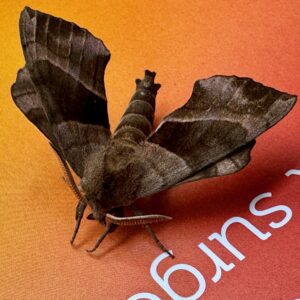
- Walnut sphinx
-
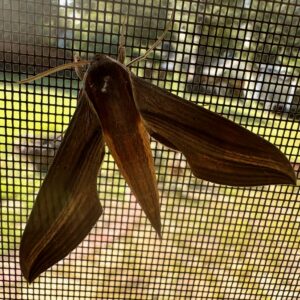
- Tersa sphinx
Photos: Featured image © jrcagle CC BY-NC. Nessus sphinx © esargent184 CC BY-NC.
Caterpillar, Pandorus, Walnut, and Tersa sphinx by Lynn Purdon Yenkey.
⁺Caterpillars of Eastern North America by David L. Wagner