by Rick Huffman
Greetings, native plant enthusiast,
I hope you’re enjoying our transitions into summer. Native plants abound anywhere you travel in South Carolina, from our roadsides and trails to our backyards. Make plans to get out and see our native treasures and take a friend along to share the magic.
Summer for our chapter may seem to slow down, but we’re busy planning for the fall and the remainder of the year. For me, it’s an opportunity to share something special about the relationship our society has built with indigenous tribes in South Carolina.
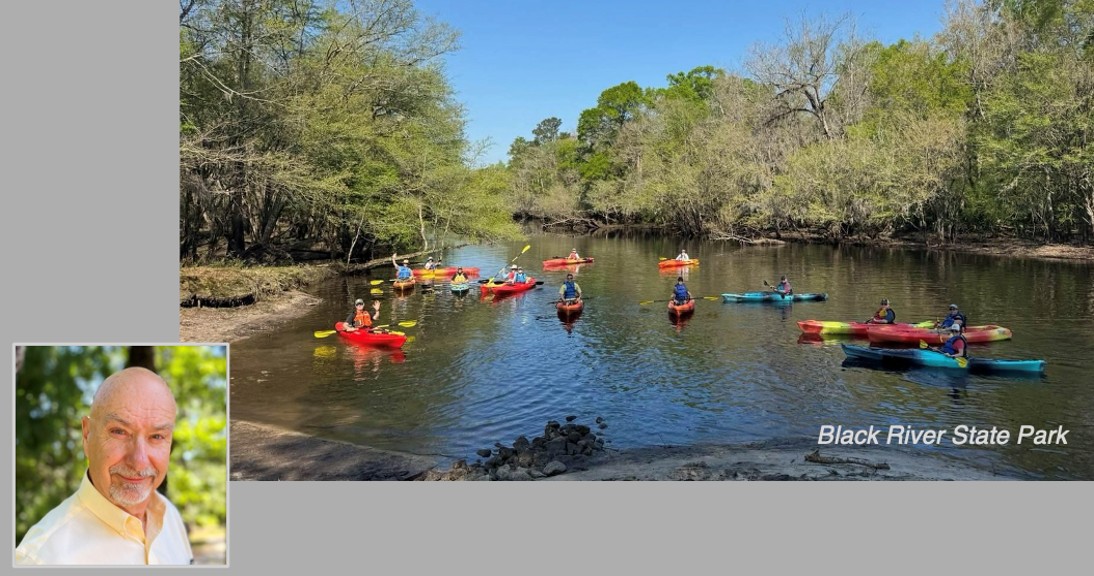
Sometimes an opportunity arises to do something profound, to make a connection. In 2021, my landscape architecture firm was selected by the Open Space Institute (OSI) to do the design for the Black River Water Trail and Park Network Master Plan that spans riverfront communities Georgetown and Williamsburg counties on land where indigenous tribes once thrived. The plan is being implemented including the opening of Black River State Park.
Restoring tribal connections to the land
Part of our work with OSI involved interviewing indigenous tribes in the region to gain insight into historical timelines. Our goal was to tell the indigenous people’s story and their connection to the river. However, the interviews we conducted didn’t reveal the full story. It was clear indigenous people felt connected to the river, but specifically who, where, and when was largely lost. I realized these people, through their experience of losing their tribal lands – some of which is only now being reclaimed – and integrating into modern society, had lost their connection to native plants and thus their culture and the land.
In our quest to uncover the story of the indigenous people, we worked to build trust in our relationships with leaders of the Pee Dee, Waccamaw, and Winyah tribes. Through that process, we forged friendships with the tribes as they gained a deepening, recovered sense of place.
Next, we invited the tribal leaders into our collaborative networks within the South Carolina Conservation Coalition, where the indigenous contribution to South Carolina culture could gain recognition throughout the community and state.
I realized SCNPS had valuable knowledge to share with the tribes about native plants – knowledge that would be central to their recovery of lost cultural traditions.
We assisted by offering tribal studies of native plants for traditional medicines, clothes, food, and shelter. We began with the Pee Dee tribe, scheduling multiple visits and classes led by herbal botanist April Punsalan, Founder of Wild Herb Academy.
Pee Dee Tribe Chief Peter Parr and Vice Chief Randolph Small became native plant converts and attended our annual symposium in Rock Hill. I attended their traditional Thanksgiving feast as a guest.
Waccamaw Indian People Vice Chief Cheryl Cail and Chief Hatcher have also become great friends and ambassadors for native plants. We recently helped their tribe secure grant funding to begin a master plan process for restoring native plants and creating spaces for events and ceremonies on the 20 acres of Waccamaw Tribal Lands they acquired in 2004 in Aynor South Carolina. Education and restoring tribal knowledge of their heritage will be key goals of the plan.
Tribal Participation in the SC Conservation Movement
When we realized our effort was already making an impact, we began working with the Open Space Institute (OSI) to expand the vision for the Black River. Through our work, we created a Tribal Network Group to integrate many tribes into the conservation movement and, most importantly, secure federal recognition for the tribes.
I nominated Pee Dee Chief Parr for the CVSC (Conservation Voters of South Carolina) Green Tie Award for conservation. He received this honor established to celebrate elected and civic leaders who passionately defend South Carolina’s air, land, and water in the General Assembly and within their own communities.
For two years, we met at various locations with tribal leaders and planned the embrace of a forgotten culture and forgotten people. Representatives in their districts got involved, became educated, and got behind the effort. Face-to-face meetings helped build trust and understanding because it’s hard to tell someone they don’t matter when they’re standing right in front of you!
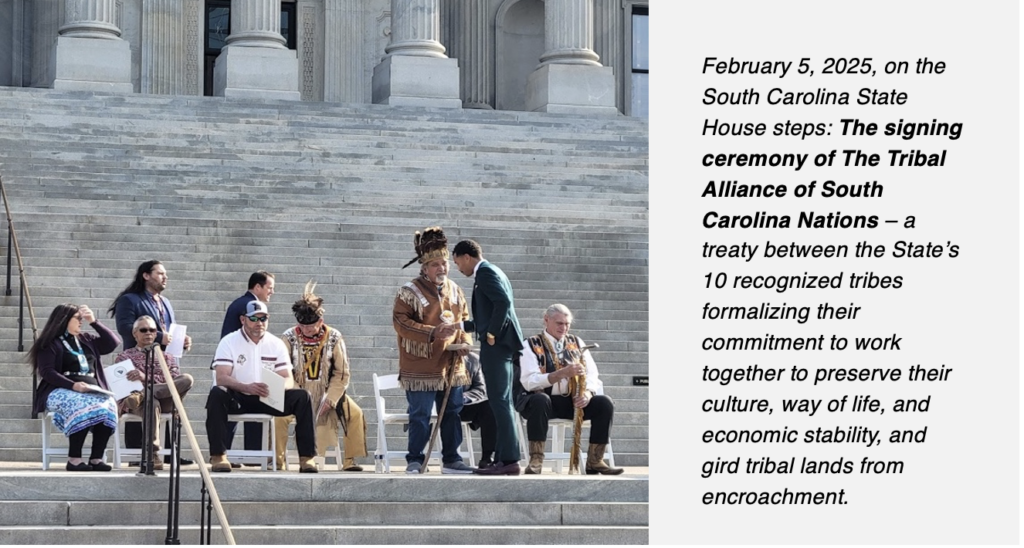
Governor McMaster supported our efforts and spoke at a historic event on the State House steps February 5, 2025, where a treaty between the state’s ten recognized tribes was signed, formalizing their commitment to work together to preserve their culture, way of life, and economic stability, and gird tribal lands from encroachment. Governor McMaster said, “The story of these tribes and these nations is the story of strength, resilience and courage.”
Full-Circle Advocacy of Plants, Land and Culture
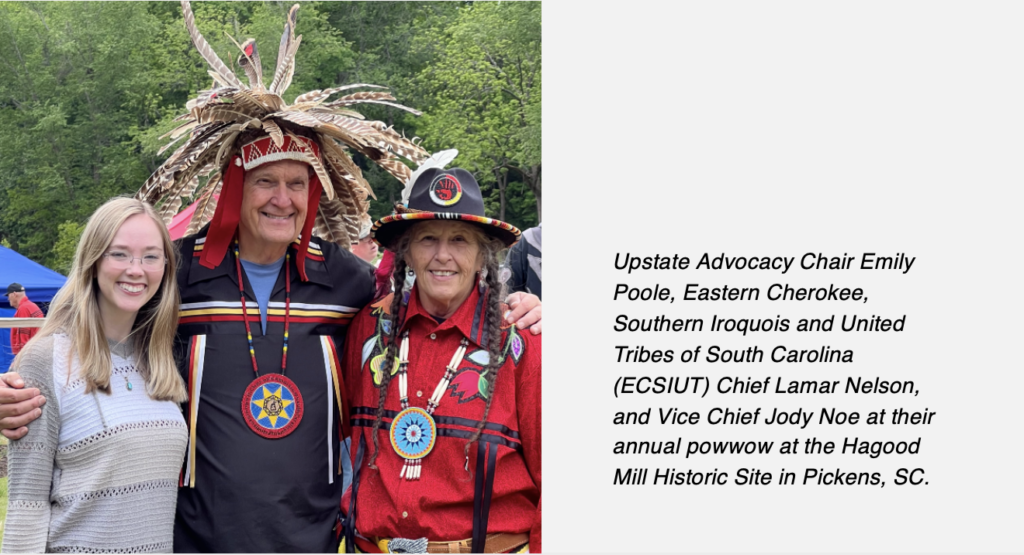
Our efforts and collaborations are ongoing. SCNPS Upstate advocacy chair Emily Poole and I are working with the Eastern Cherokee, Southern Iroquois and United Tribes of South Carolina (ECSIUT) to look for tribal land in their ancestral homelands, which included Greenville, Pickens, Oconee, Spartanburg, and Anderson Counties.
Working with ECSIUT Chief Lamar Nelson, we’ve attended powwow events in Pickens County and have made calls to our partners to explore options that support his tribe’s connection to and conservation of ancestral lands.
Emily also serves the tribe in her professional role as an attorney at South Carolina Environmental Law Project (SCELP), and in 2025, she helped the tribe become a state-recognized tribe. Her unwavering commitment to fight for indigenous people’s conservation causes led Chief Nelson to give Emily the name “Tiger Woman,” and that’s what he calls her!
As chapter president and founder of SCNPS, I feel our advocacy for South Carolina’s indigenous tribes brings us full circle as an organization that is not only the voice for native plants but serves as a catalyst for social and environmental justice for our land and people. It’s part of our educational mission and values to support a forgotten people in reclaiming their heritage and connection to the land through the lens of native plants. When opportunities knock, we do not turn away. We all should feel proud to be part of something bigger than ourselves.
SCNPS, now 30 years old, is a place where enthusiasts and volunteers can get involved to make a real difference for our environment, our history, and our culture. We need you. We need folks to join us, make a difference, and embrace our treasured native plants and the cultures that depend on them.
Regards, Rick Huffman
Upstate Chapter President