By Jon Storm, Co-Director of Publicity & Social Media
Learn about a few of the many native plants you’ll find at our Spring Native Plant Sale.
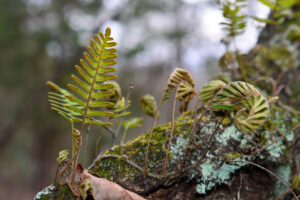
Resurrection fern (Pleopeltis michauxiana, formerly called Pleopeltis polypodioides var. michauxiana) is a well-named native plant. In dry weather, the fronds curl up and turn brown. But on wet days, the fronds unfurl and turn green, as if the fern was coming back from the dead! Resurrection fern is an epiphyte – a plant that grows on another plant rather than in the soil. But don’t worry, this fern won’t harm its host tree, it obtains its moisture from the surrounding air and raindrops that fall on its fronds. Scales cover the stalk (stipe) and underside of each frond. The scales channel water from the frond’s surface and the surrounding air into the fern’s tissues. Resurrection fern often grows among mosses on rough-barked trees and rocks.
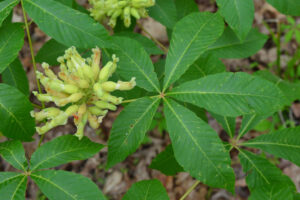
Painted buckeye (Aesculus sylvatica) has yellowish flowers each spring that are visited by native bumblebees and ruby-throated hummingbirds. This shrub grows in bottomland forests and has a narrow distribution, occurring mostly in the Piedmont from southern Virginia down to Alabama. It’s one of the first plants to leaf out in early spring but also one of the first to lose its leaves in late summer.
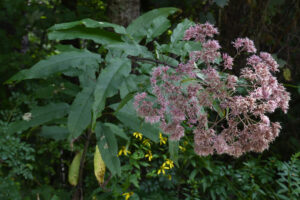
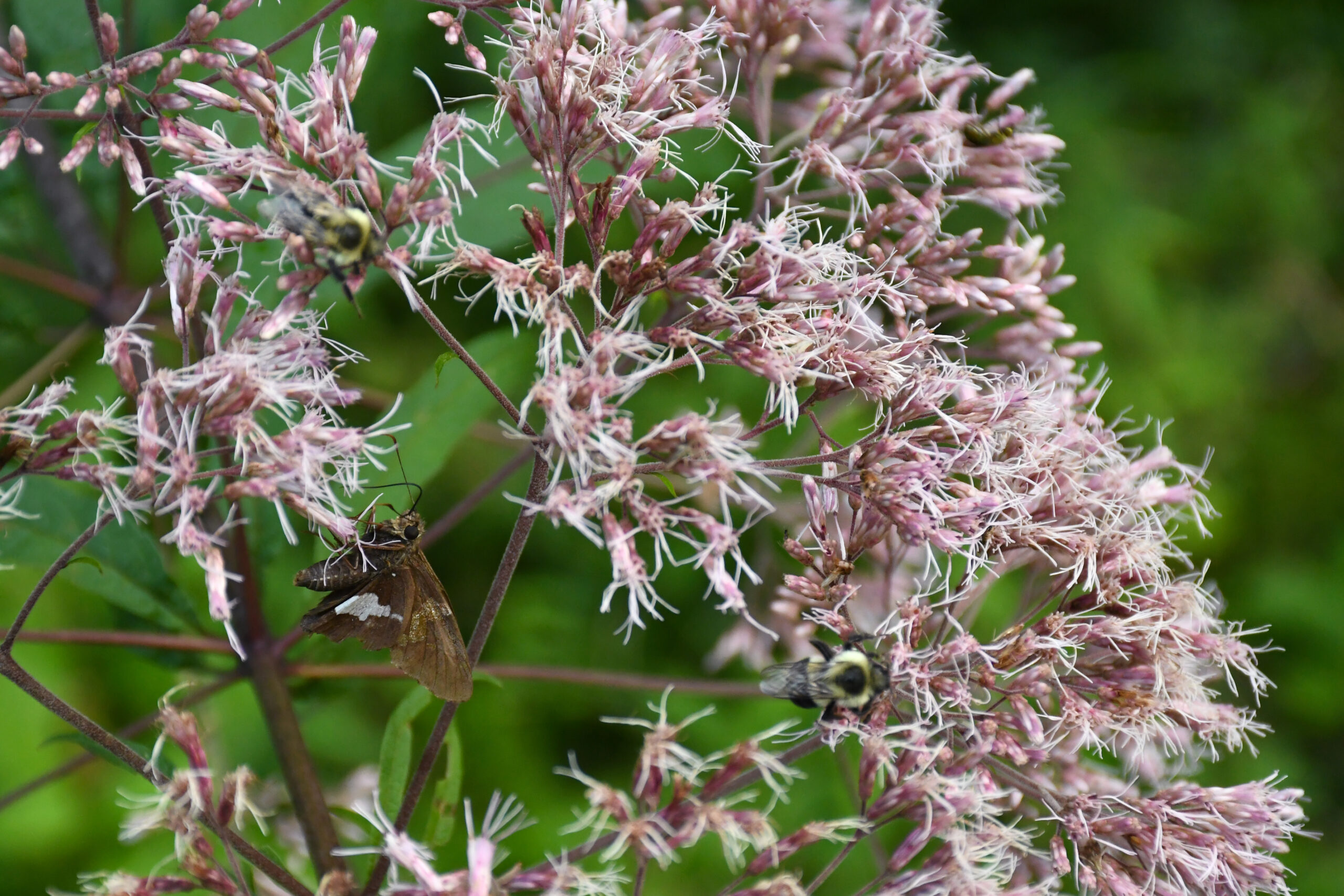
If you’re looking for something to plant in a moist, sunny flower garden, hollow-stem Joe pyeweed (Eutrochium fistulosum) might suit your needs. This 5-8-foot-tall forb attracts a wide range of pollinators, including bees, eastern tiger swallowtails, silver-spotted skippers, red admirals, and monarchs. Its long, hollow stem is purplish and has a pleasant vanilla odor. Joe pyeweed is named after a Native American medicine man, Joe Pye, who is said to have cured an outbreak of typhoid fever in Colonial Massachusetts using a concoction from this plant.