Many people associate fall with a certain kind of decor. Fallen leaves in a variety of yellows, reds, and oranges, haybails, pumpkins, and of course mums. Fall mums are a staple in your traditional garden center right now. Mum is short for Chrysanthemum, which has a wide distribution, but is only native to Eurasia and north Indo-China. Not only are they non-native, but the ones normally purchased to adorn your porch in the fall are annuals that do not survive our first hard frost. Stop throwing away your money (literally) for some fleeting, non-native color and instead invest in some native asters!
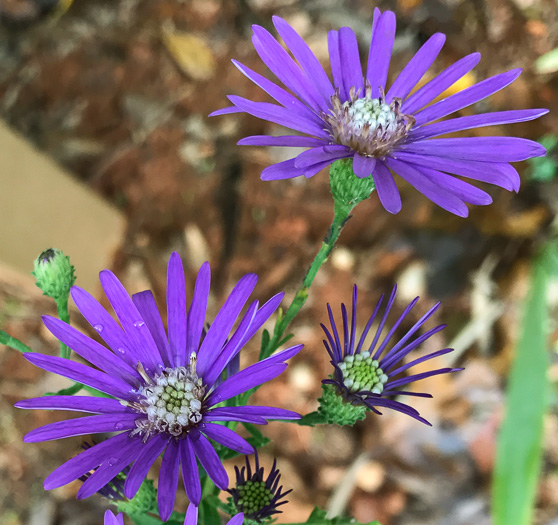
We have many native, fall blooming asters to choose from, but today I am going to focus on one of my favorites (anyone who knows me will immediately know why) – the Georgia aster (Symphyotrichum georgianum). This beautiful aster features heads of dark purple ray flowers and white to cream color disc flowers in clusters atop 1.5-3 foot stems. The leaves are alternate, oblanceolate, and clasp the stem. In the wild, Georgia aster can be found growing in fire-dependent dry, rocky woodlands, woodland borders, roadbanks, powerline rights-of-way, primarily in post oak or blackjack oak woodlands or savannas. In cultivation, grow in full sun to part shade in well drained dry soil. Georgia aster is quite drought tolerant once established and spreads by rhizomes.
Georgia asters are visited by a variety of nectaring and pollen collecting insects including bees and butterflies. Plants in this genus are also important for specialized bees in the genus Andrena. Unfortunately, this species has become quite rare throughout its fairly limited range of North Carolina, Georgia, Alabama, and the Florida panhandle due to fire suppression and habitat loss. Even more reason to add it to your garden!
Photo Credit: JK Marlow