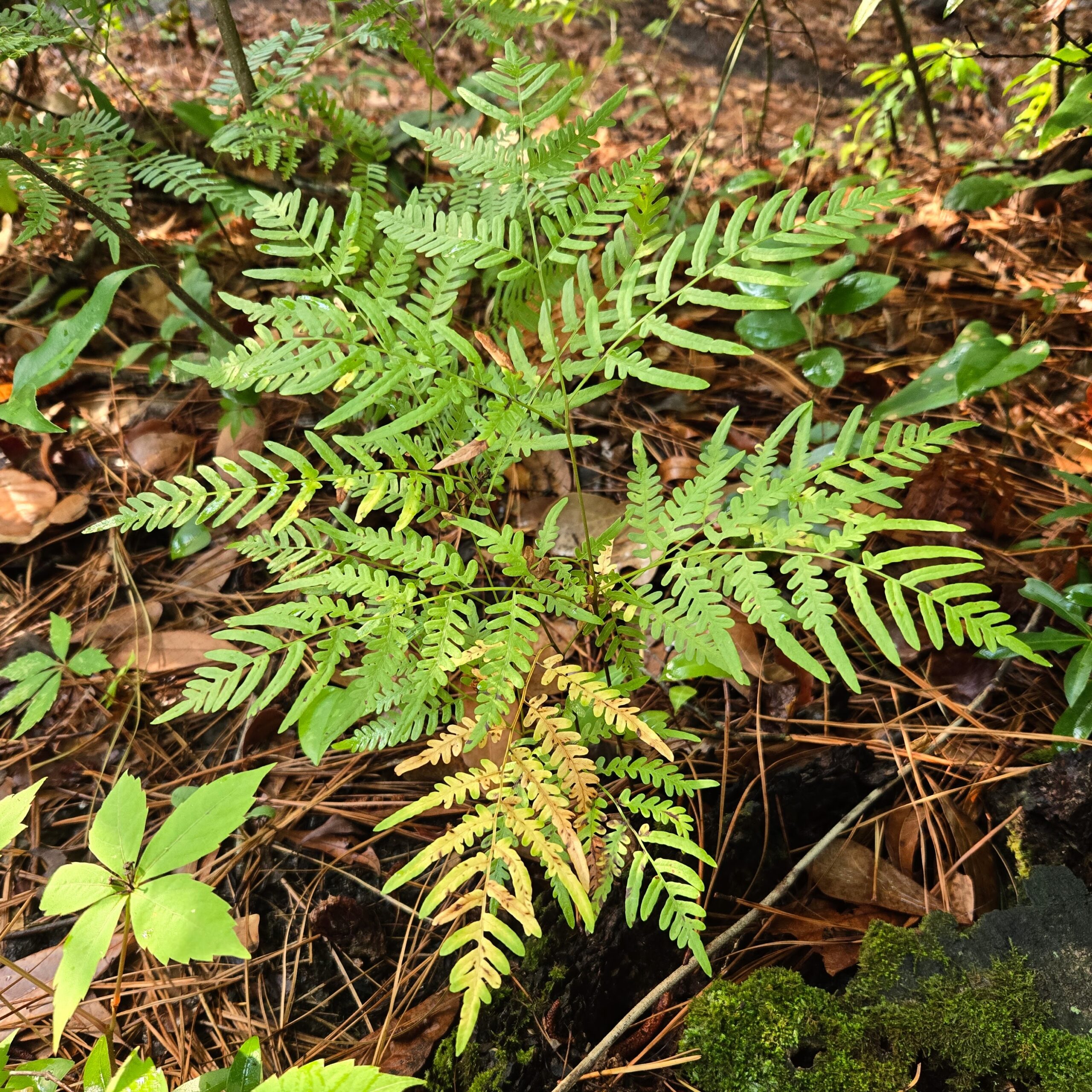
We all love wildflowers. They’re colorful, showy, and provide food for our wonderful pollinators. When out enjoying nature, whether it be in your own yard or out hiking and exploring, it’s easy to overlook our native non-flowering plants. One of the most ubiquitous and easily recognizable ones is the bracken fern, Pteridium aquilinum.
Originally native to Europe, East Asia, and North America, bracken is one of the most widely distributed plants in the world and can be found on every continent except Antarctica. It’s highly adaptable and is often the first plant to come back after habitat disturbances, such as burns or logging. It reproduces via spores, which form in late summer along the curled margins of fertile fronds, and readily spreads via rhizomatous cloning. Clones can form large colonies that span hundreds of feet and live for centuries. Bracken are vigorous growers in ideal conditions and can be difficult to control or eradicate once established, making them unsuitable for most home gardens.
Bracken prefer acidic soils and grow well in sandy, peaty, or otherwise poor soils. It can adapt to full sun or full shade and, once established, will tolerate short periods of drought. Fronds grow up to 3’ tall and form wide colonies. It is a deciduous fern and will die back after the first fall frost, sending up new fiddleheads in the spring. While young fiddleheads are considered edible and have been consumed by humans for centuries, all parts of bracken contain toxic and carcinogenic compounds.
Bracken is one of the oldest ferns, showing up in the fossil records 55 million years ago, and has been a part of human history for millenia. It has been used as a food source and medicinal plant by many peoples and cultures. Bracken has also been used to produce a dye for wool and leather, and potash for making soap, glass, and bleach.
Next time you’re out enjoying nature, be sure to keep an eye out for this fascinating plant!