
Cornaceae
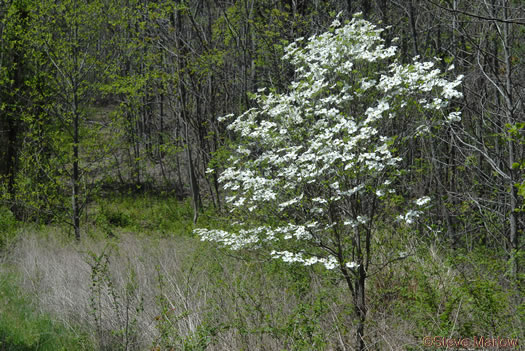
flowering dogwood
Benthamidia florida
Synonyms
Cornus florida
Cynoxylon floridum
Plant Type
Small Tree/Large Shrub (10-25 ft)
Life Cycle
Perennial
Typical Size
15-25 ft. tall
15-30 ft. wide
Tolerant of
Drought
Inolerant of
Poorly Drained Soil
Propagation
By seed
Plant Propagation Notes
Seeds require 30-60 days of cold moist stratification to germinate.
Plants/Diseases
Flowering dogwood is susceptible to a number of pests and diseases including calico scale, dogwood borer, dogwood sawfly, Japanese maple scale, leafhoppers, oyster shell scale, powdery mildew, leaf spot, canker, root rot and leaf, twig blight crown canker, bacterial leaf scorch, powdery mildew and septoria leaf spot. Dogwood anthracnose is not all that common, except at 1800 feet or higher elevation. Spot anthracnose is more common. Trees are sensitive to pollution and are not usually suitable for urban environments.
Wildlife Benefits
Nectar/pollen source for pollinating insects, Host plant for butterfly larvae, Fruit/seeds for birds
Leaves
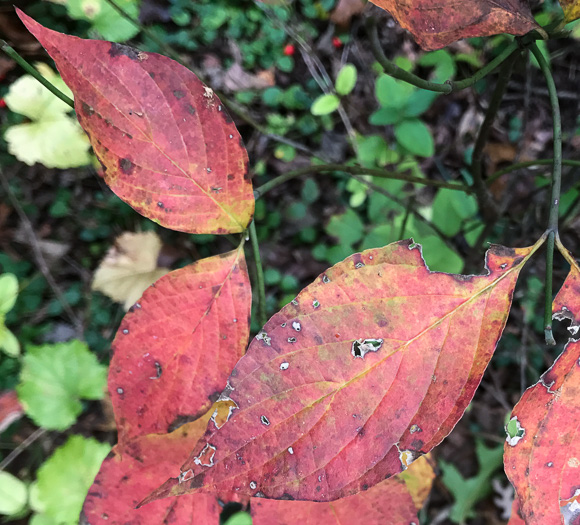
Simple, opposite leaves with distinctive veination patterns.
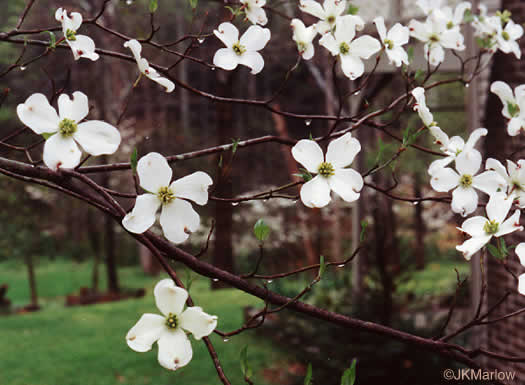
Flowers
Large white flowers with four petals.
Fruit
Bright red drupes.
Bark
Young bark is brown maturing to grey with square to rectangle ridges.
Toxicity
No known toxicity.
USDA Hardiness Zones
5, 6, 7, 8, 9
Light Exposure
Full Sun, Part Sun/Shade
Soil Moisture
Medium, Moist
Soil Drainage
Well-drained
Soil pH
Acidic (less than 6.0), Neutral (6.0-8.0)
Native in South Carolina?
Yes
Plant Native Habitat
Dry to moist forests and woodlands.
Global Conservation Status (NatureServe)
Secure (G5)
Federal Conservation Status (USFWS)
Not Listed
Distribution Notes
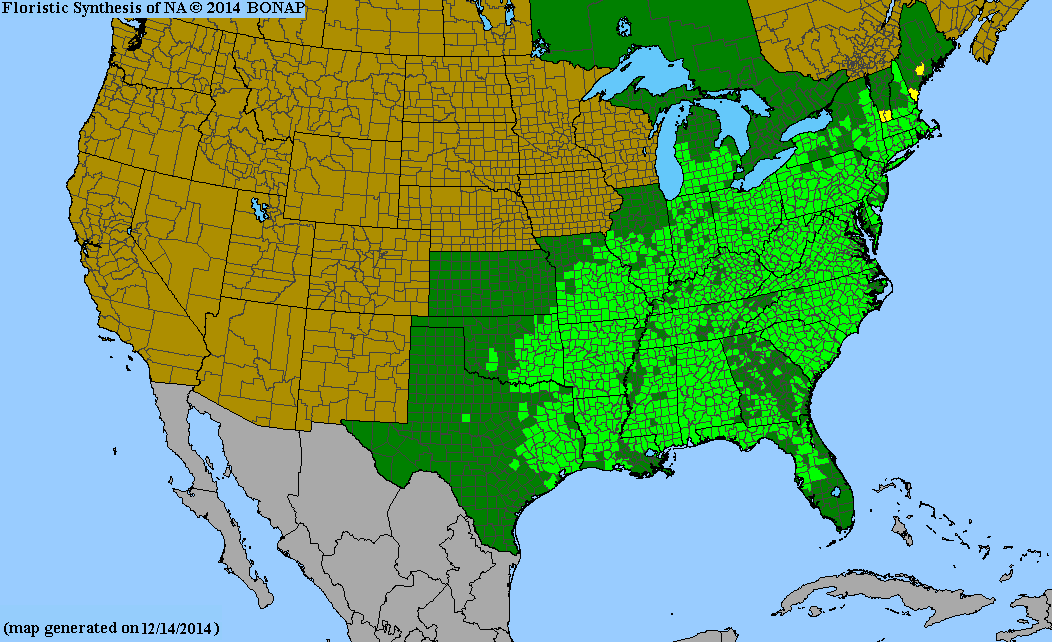
Common in the coastal plain, piedmont, and mountains.