
Apocynaceae
sandhill milkweed
Asclepias humistrata
Other Common Names
fleshy milkweed, pinkveined milkweed
Plant Type
Herbaceous Wildflower
Life Cycle
Perennial
Typical Size
1-3 ft. tall
2-3 ft. wide
Tolerant of
Drought
Inolerant of
Poorly Drained Soil
Propagation
By seed
Plant Propagation Notes
Fresh seed will germinate without pre-treatment. Stored seed should be cold moist stratified for 90 days.
Plants/Diseases
No significant pests or disease issues. Aphids can be an issue in high quantities.
Wildlife Benefits
Nectar/pollen source for pollinating insects, Host plant for butterfly larvae
Leaves
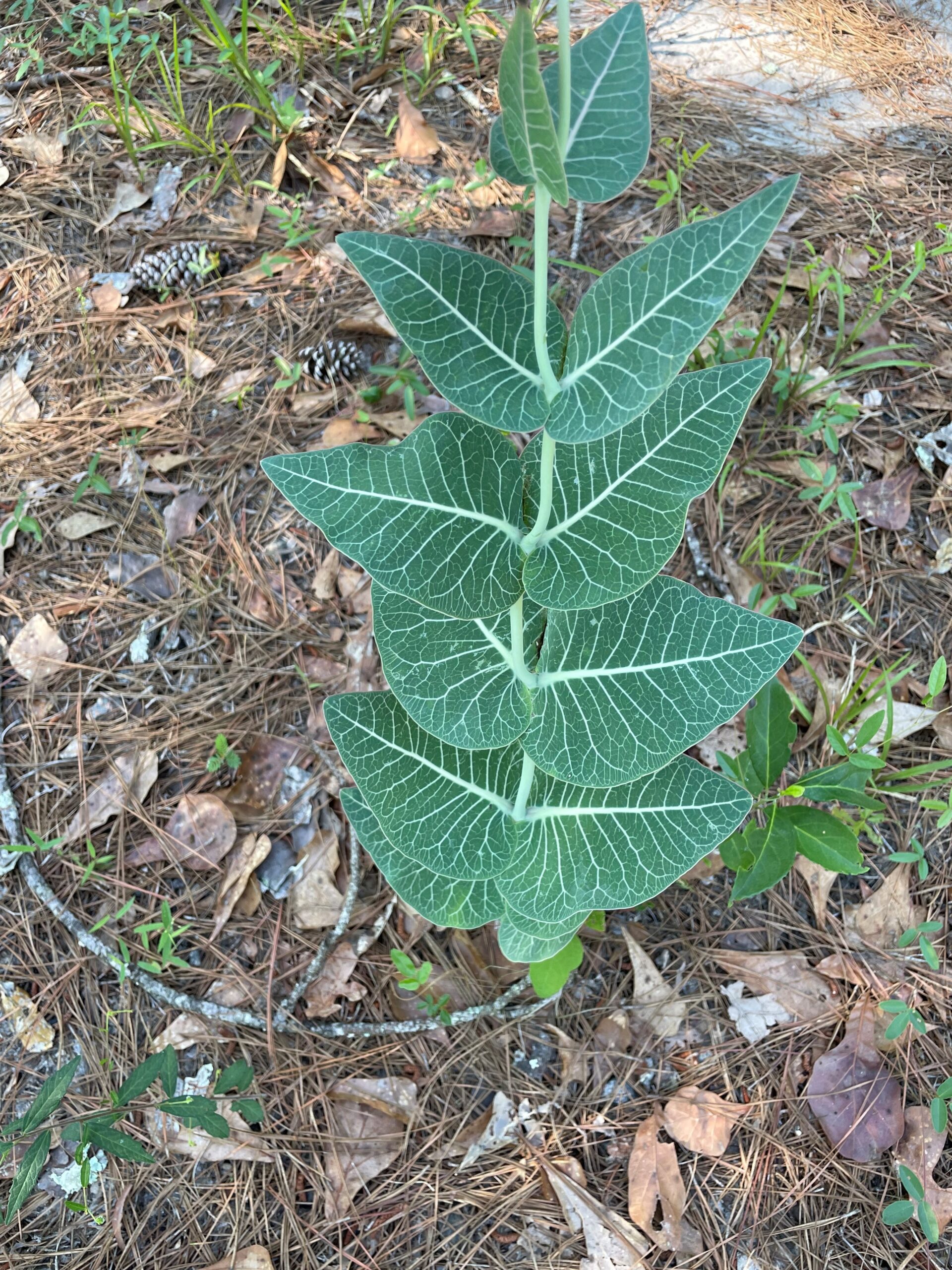
Large ovate leaves, arranged opposite along the stem with entire margins. Deep green with distinctive pink veination.
Flowers
Pinkish purple radially symmetric with 5 petals.
Fruit
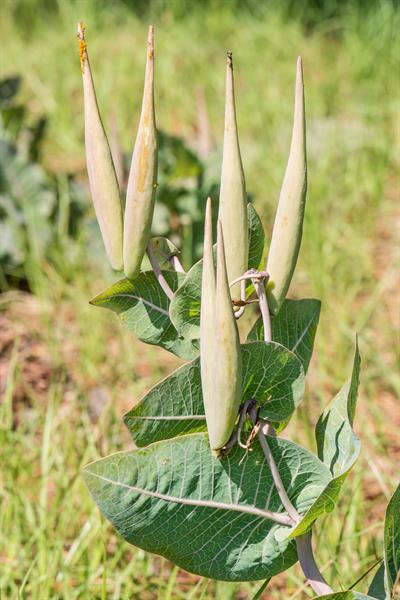
Large follicles that contain flat, round brown seeds that are wind dispersed.
Toxicity
Mildly toxic and should not be consumed.
USDA Hardiness Zones
8, 9
Light Exposure
Full Sun
Soil Moisture
Dry
Soil Drainage
Well-drained
Soil pH
Acidic (less than 6.0), Neutral (6.0-8.0)
Native in South Carolina?
Yes
Plant Native Habitat
Longleaf pine sandhills, Florida scrub, and open sandy areas.
Global Conservation Status (NatureServe)
Secure (G5)
Federal Conservation Status (USFWS)
Not Listed
Distribution Notes
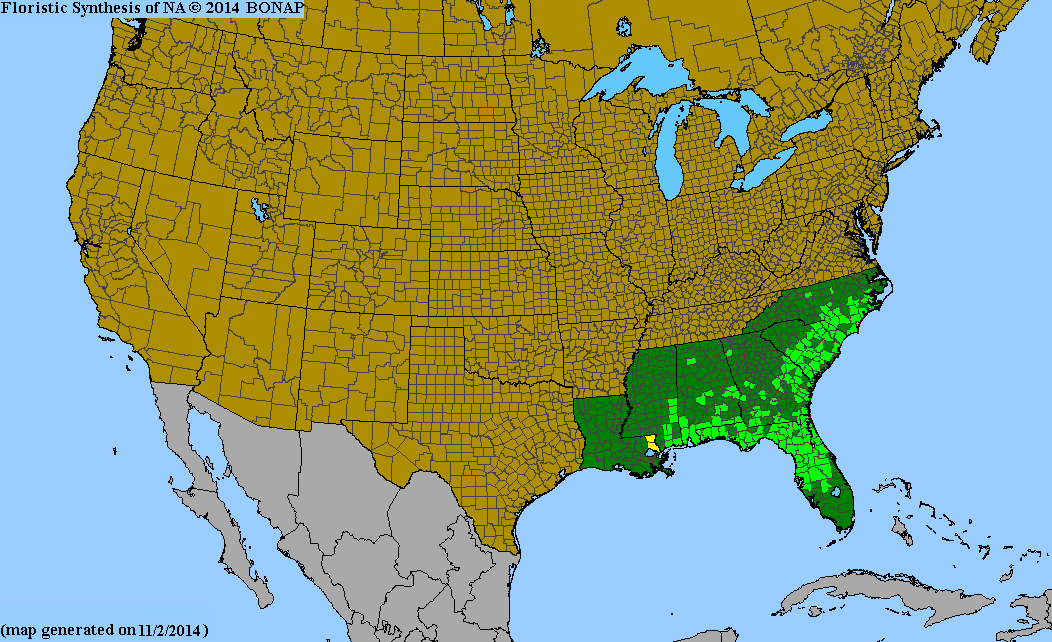
Common in the coastal plain. Absent from the piedmont and mountains.