
Rosaceae
eastern goat's beard
Aruncus dioicus
Synonyms
Aruncus allegheniensis
Aruncus aruncus
Other Common Names
bride's feathers, goats beard
Plant Type
Herbaceous Wildflower
Life Cycle
Perennial
Typical Size
3-6 ft. tall
2-4 ft. wide
Inolerant of
Dry Soil, Direct Afternoon Sun
Propagation
By seed, By division
Plant Propagation Notes
Fresh seed should germinate in 2-3 weeks without pre-treatment. Older seed should be cold moist stratified for at least 30 days.
Plant Planting Notes
Amend soil with organic matter prior to planting.
Plants/Diseases
Minor susceptibility to sawflies and leaf spot.
Wildlife Benefits
Nectar/pollen source for pollinating insects, Host plant for butterfly larvae
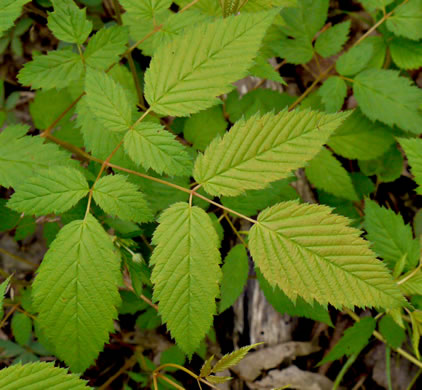
Leaves
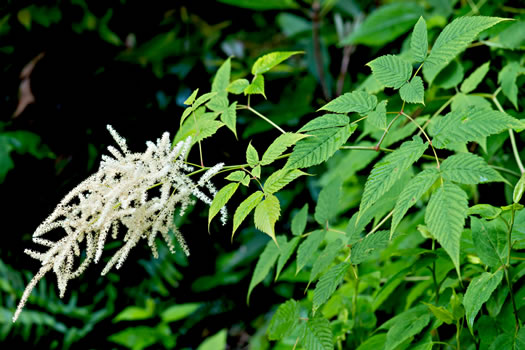
Alternate compound leaves with lanceolate leaflets that are double serrated.
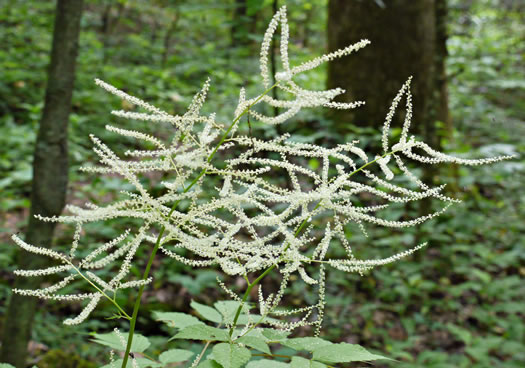
Flowers
Separate male and female flowers, with the male flowers being showier. Tiny white flowers arranged on a panicle.
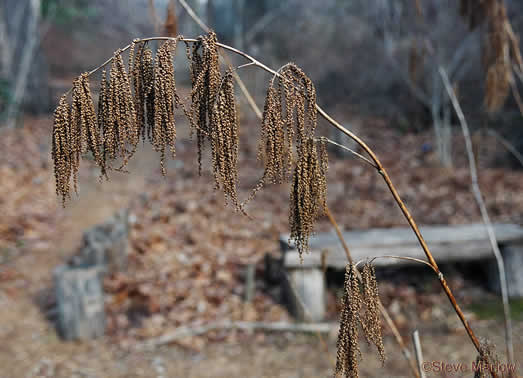
Fruit
Brown to copper follicle.
Toxicity
No known toxicity.
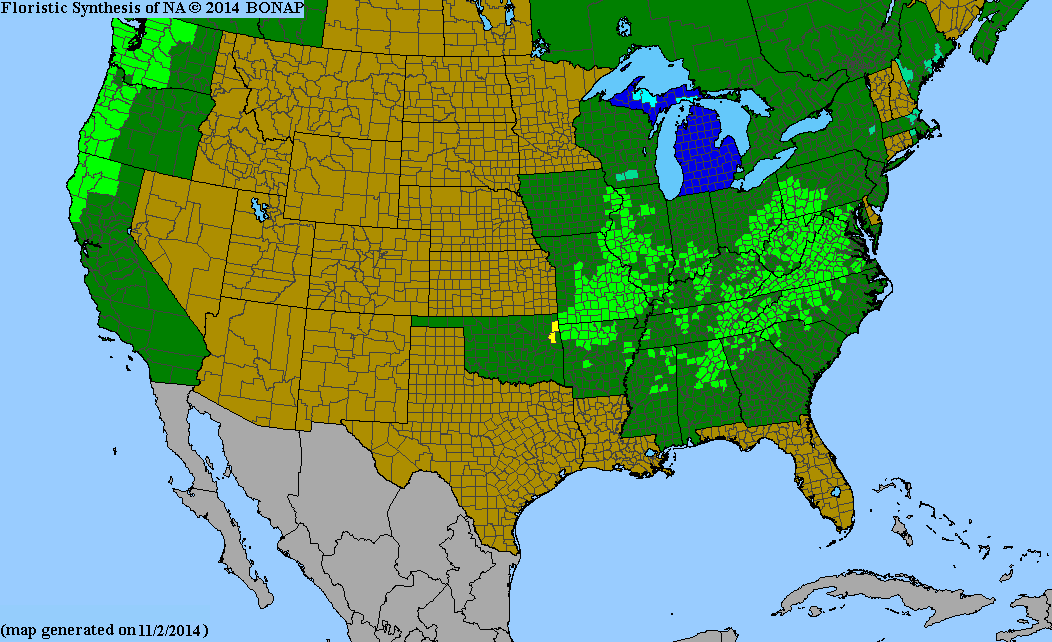
USDA Hardiness Zones
3, 4, 5, 6, 7
Light Exposure
Part Sun/Shade, Full Shade
Soil Moisture
Moist
Soil pH
Acidic (less than 6.0), Neutral (6.0-8.0)
Native in South Carolina?
Yes
Plant Native Habitat
Moist, nutrient rich forests.
Global Conservation Status (NatureServe)
Secure (G5)
Federal Conservation Status (USFWS)
Not Listed
Distribution Notes
Rare in the piedmont. Common in the upstate. Absent from the coastal plain.
Subspecies
Aruncus dioicus var. dioicus
Aruncus dioicus var. pubescens
Aruncus dioicus var. vulgaris