
Rosaceae
eastern serviceberry
Amelanchier canadensis
Synonyms
Amelanchier botryapium
Amelanchier onlongifolia
Amelanchier lucida
Plant Type
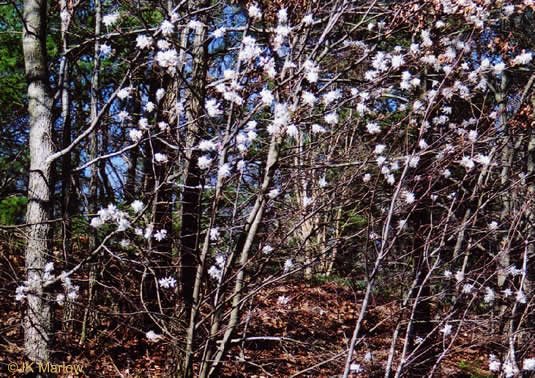
Small Tree/Large Shrub (10-25 ft)
Life Cycle
Perennial
Typical Size
15-25 ft. tall
15-20 ft. wide
Tolerant of
Occasional Flooding
Inolerant of
Dry Soil
Propagation
By seed, By cutting
Plant Propagation Notes
Cold moist stratify seed for 120 days or take softwood cuttings in spring or summer.
Plants/Diseases
May experience some foliar diseases such as rust, leaf spot, blight, and powdery mildew can occur. Herbivorous insects that affect the leaves include the sawfly, leaf miner, borers and scale.
Wildlife Benefits
Nectar/pollen source for pollinating insects, Host plant for butterfly larvae, Fruit/seeds for birds, Supports numerous caterpillars (bird food)
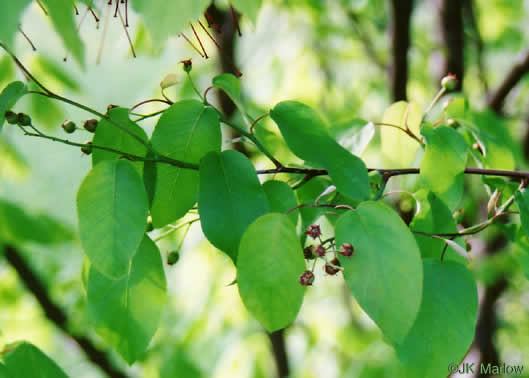
Leaves
Simple, elliptical leaves are alternate and have serrated margins.
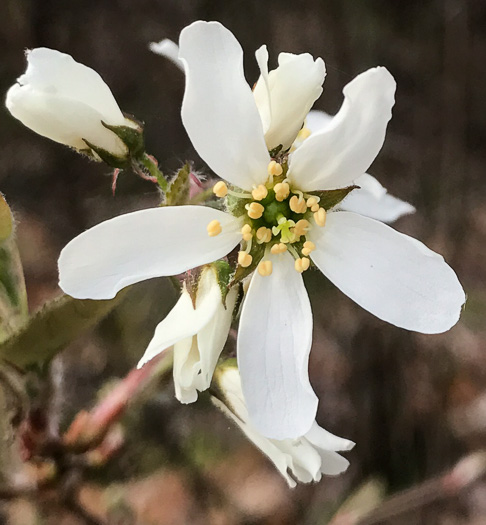
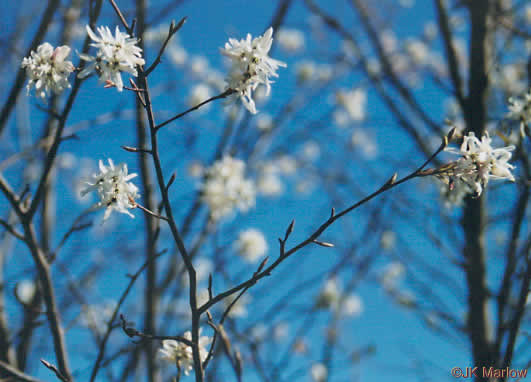
Flowers
Showy white and sometimes pink flowers with 4-5 petals.
Fruit
Dark purple to black berry-like pomes.
Bark
Young bark is smooth and develops ridges with maturity.
Toxicity
No known toxity.
Edibility
Fruits are edible.
USDA Hardiness Zones
3, 4, 5, 6, 7, 8
Light Exposure
Full Sun, Part Sun/Shade, Full Shade
Soil Moisture
Moist
Soil Drainage
Well-drained
Native in South Carolina?
Yes
Plant Native Habitat
Pocosins, acidic wetlands, bogs, wet pine flatwoods, maritime forests.
Global Conservation Status (NatureServe)
Secure (G5)
Federal Conservation Status (USFWS)
Not Listed
Distribution Notes
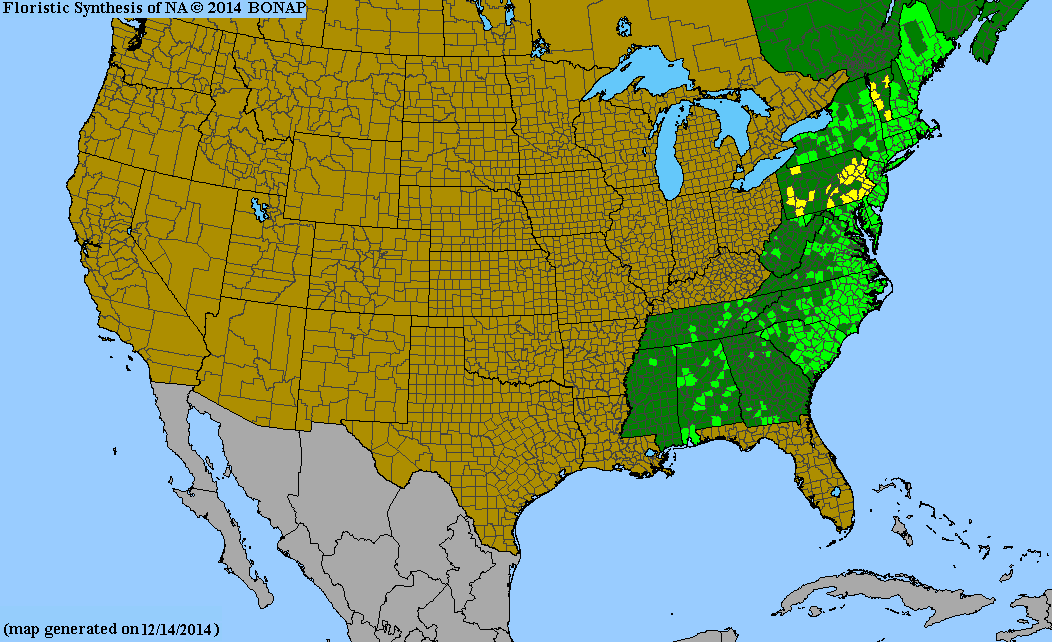
Common in the coastal plain, uncommon in the piedmont, and rare in the mountains.