
Alliaceae
nodding onion
Allium cernuum
Plant Type
Herbaceous Wildflower
Life Cycle
Perennial
Typical Size
0.5-2 ft. tall
0.5-1 ft. wide
Tolerant of
Drought
Inolerant of
Poorly Drained Soil
Propagation
By seed, By division
Plant Propagation Notes
Seeds require scarification to germinate. Bulbs can be divided.
Plants/Diseases
No significant pest or disease issues.
Wildlife Benefits
Nectar/pollen source for pollinating insects, Fruit/seeds for birds
Leaves
Linear leaves arranged in a rosette at the base of the plant.
Flowers
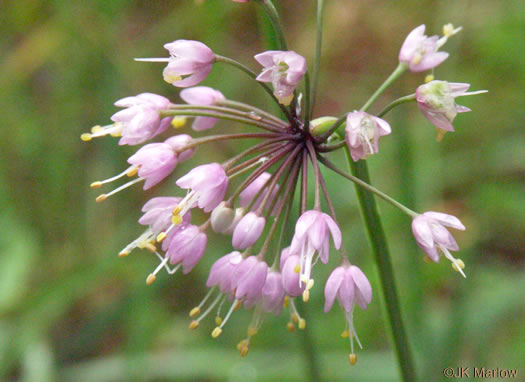
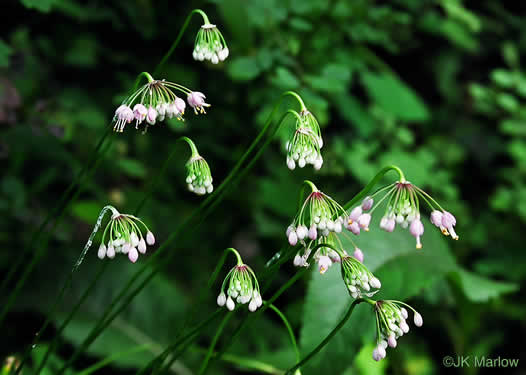
pink, lavender, or white bell-shaped flowers with 6 rays arranged in an umbel.
Fruit
capsule containing shiny black seeds.
Toxicity
No known toxicity.
Edibility
Historical use of bulbs for onions, but have largely stopped being used.
USDA Hardiness Zones
4, 5, 6, 7, 8
Light Exposure
Full Sun, Part Sun/Shade
Soil Moisture
Medium, Moist
Soil Drainage
Well-drained
Soil pH
Acidic (less than 6.0), Neutral (6.0-8.0), Basic (greater than 8.0)
Native in South Carolina?
Yes
Plant Native Habitat
Open woodlands or around outcrops of shale, mafic, ultramafic, or calcareous rocks
Global Conservation Status (NatureServe)
Secure (G5)
Federal Conservation Status (USFWS)
Not Listed
Distribution Notes
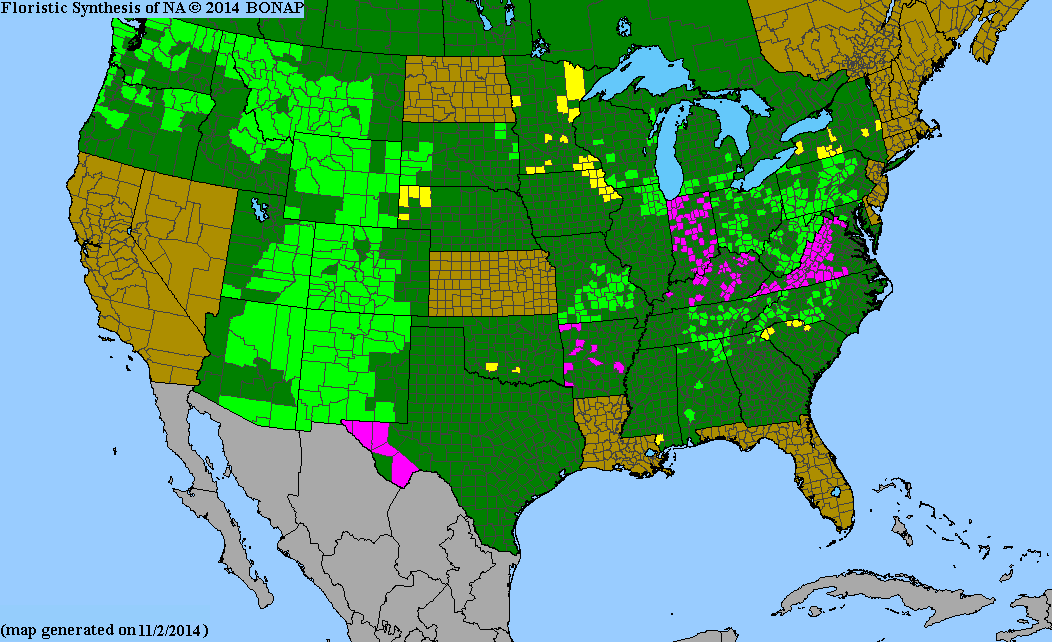
Absent in the coastal plain, rare in the piedmont and mountains.