
Asteraceae
common white snakeroot
Ageratina altissima
Synonyms
Eupatorium rugosum
Eupatorium urticifolium
Other Common Names
common milk-poison
Plant Type
Herbaceous Wildflower
Life Cycle
Perennial
Typical Size
2-5 ft. tall
2-4 ft. wide
Tolerant of
Drought
Inolerant of
Poorly Drained Soil
Propagation
By seed
Plant Propagation Notes
Seeds require cold moist stratification for at least 60 days and must be surface sowed to germinate.
Plants/Diseases
Susceptible to leaf miners and flea beetles.
Wildlife Benefits
Nectar/pollen source for pollinating insects, Fruit/seeds for birds
Leaves
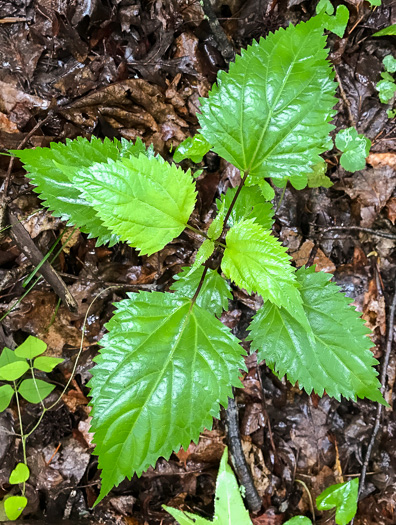
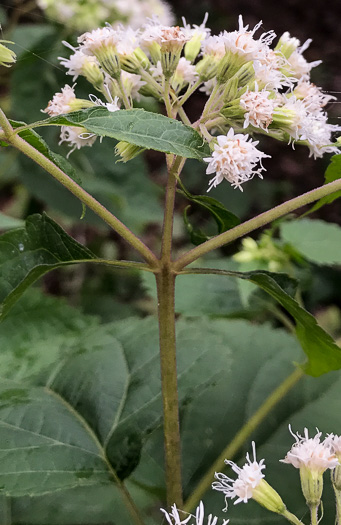
Leaves simple, opposite with toothed margins.
Flowers
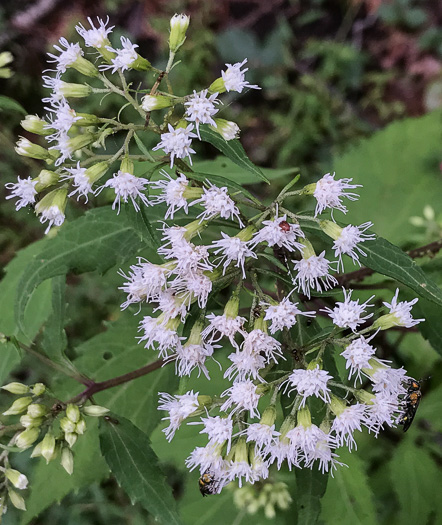
White disc flowers with no ray flowers arranged in a corymb.
Fruit
Achene.
Toxicity
All parts of the plant are toxic should not be consumed by humans or livestock.
USDA Hardiness Zones
3, 4, 5, 6, 7, 8, 9
Light Exposure
Full Sun, Part Sun/Shade
Soil Moisture
Medium, Moist
Soil Drainage
Well-drained
Soil pH
Acidic (less than 6.0), Neutral (6.0-8.0)
Native in South Carolina?
Yes
Plant Native Habitat
Moist to mesic forests, successional forests, old fields.
Global Conservation Status (NatureServe)
Secure (G5)
Federal Conservation Status (USFWS)
Not Listed
Distribution Notes
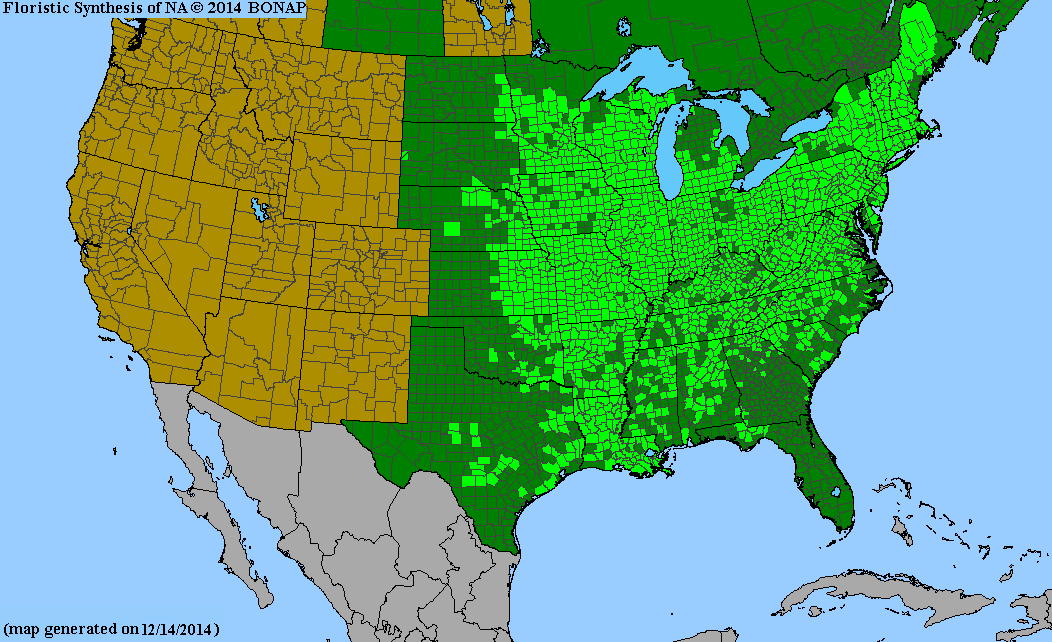
Rare in the coastal plain, uncommon in the piedmont, common in the mountains.