by Jeanne Malmgren
Did you know that the first “green” cemetery in the United States is located in Upstate South Carolina? Amazing, I know, but it’s true. And there’s an equally amazing history behind this beautiful place on a winding back road in Oconee County.
First, let’s define what a green cemetery is.
The difference between a commercial cemetery and a natural burial ground is immediately visible. A green cemetery—usually located in a grassy meadow or a woodland—has no manicured lawns, no sidewalks. The graves are not decorated with plastic flowers and tall headstones. The bodies brought there are not embalmed, not sealed in metal coffins. Everything is biodegradable.
The overall setting is one of peace, a place undisturbed by time and development.
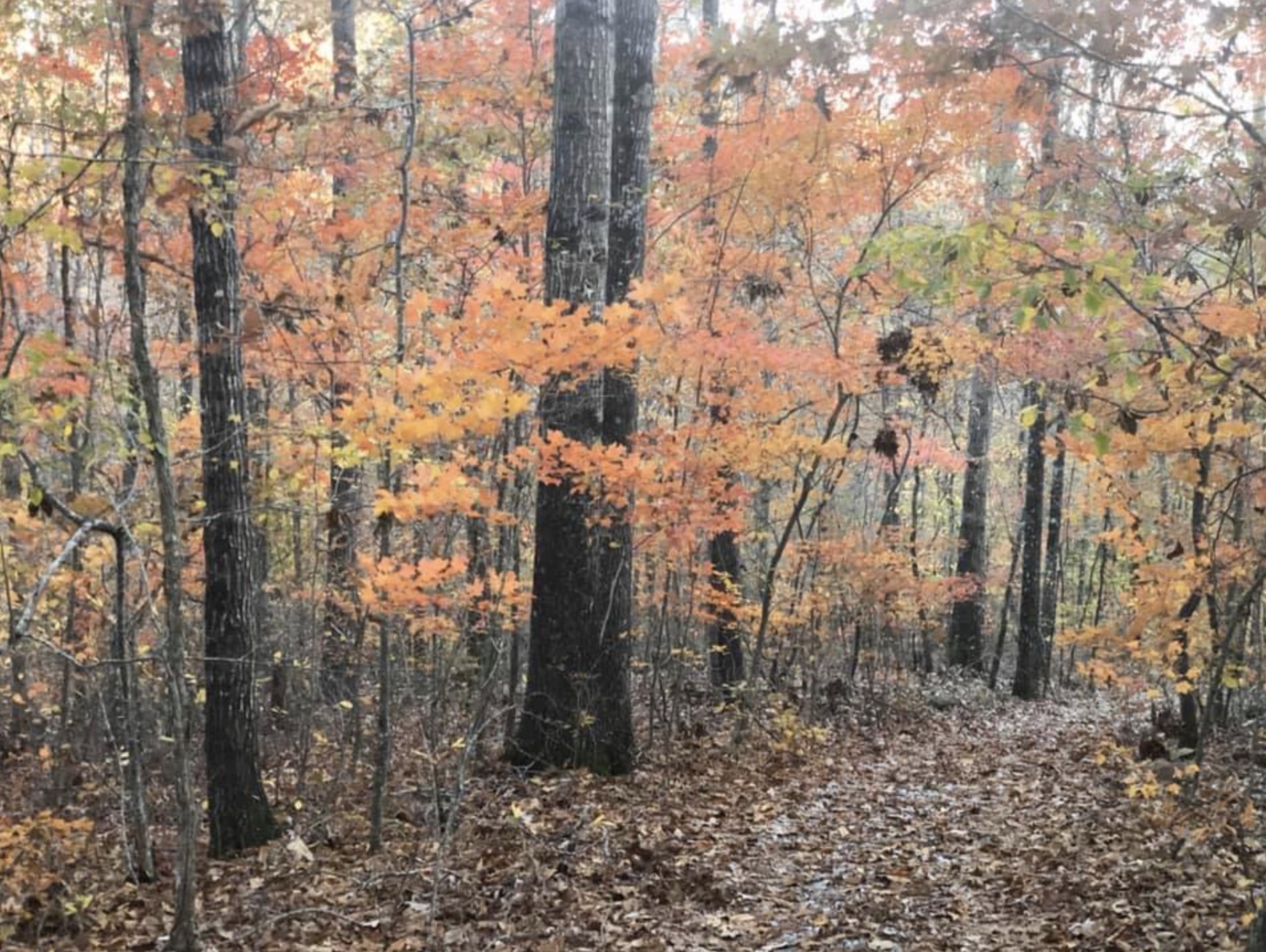
Photo Credit: Billy and Kimberley Campbell
Ramsey Creek Preserve, outside of Westminster, is such a place. It was founded by Billy and Kimberley Campbell. In the late 1990s, they decided to turn their wooded 36 acres into what they call a “conservation burial ground” that would be maintained sustainably. In 2006, they partnered with Upstate Forever to place a permanent conservation easement on the property. Ramsey Creek Preserve was then designated by the Green Burial Council as the first Certified Conservation Burial Ground in the U.S.
“Our goal is to both preserve and, where appropriate, restore natural areas,” said Billy Campbell, a physician and self-taught naturalist. “If we only ‘reduce damage,’ we have failed. We want the net effect to be overwhelmingly positive. While it might seem logical that digging a grave-sized hole would inevitably cause degradation, that idea is not supported by natural disturbance regimes such as pit mounds created when a tree falls in the forest. We use fine-scale, ongoing botanical evaluations to avoid digging up such unmovable plants as saprophytic/hemiparasitic crested coral root (Hexalectris spicata). As Aldo Leopold said, the first rule of intelligent tinkering is to keep all the pieces.”
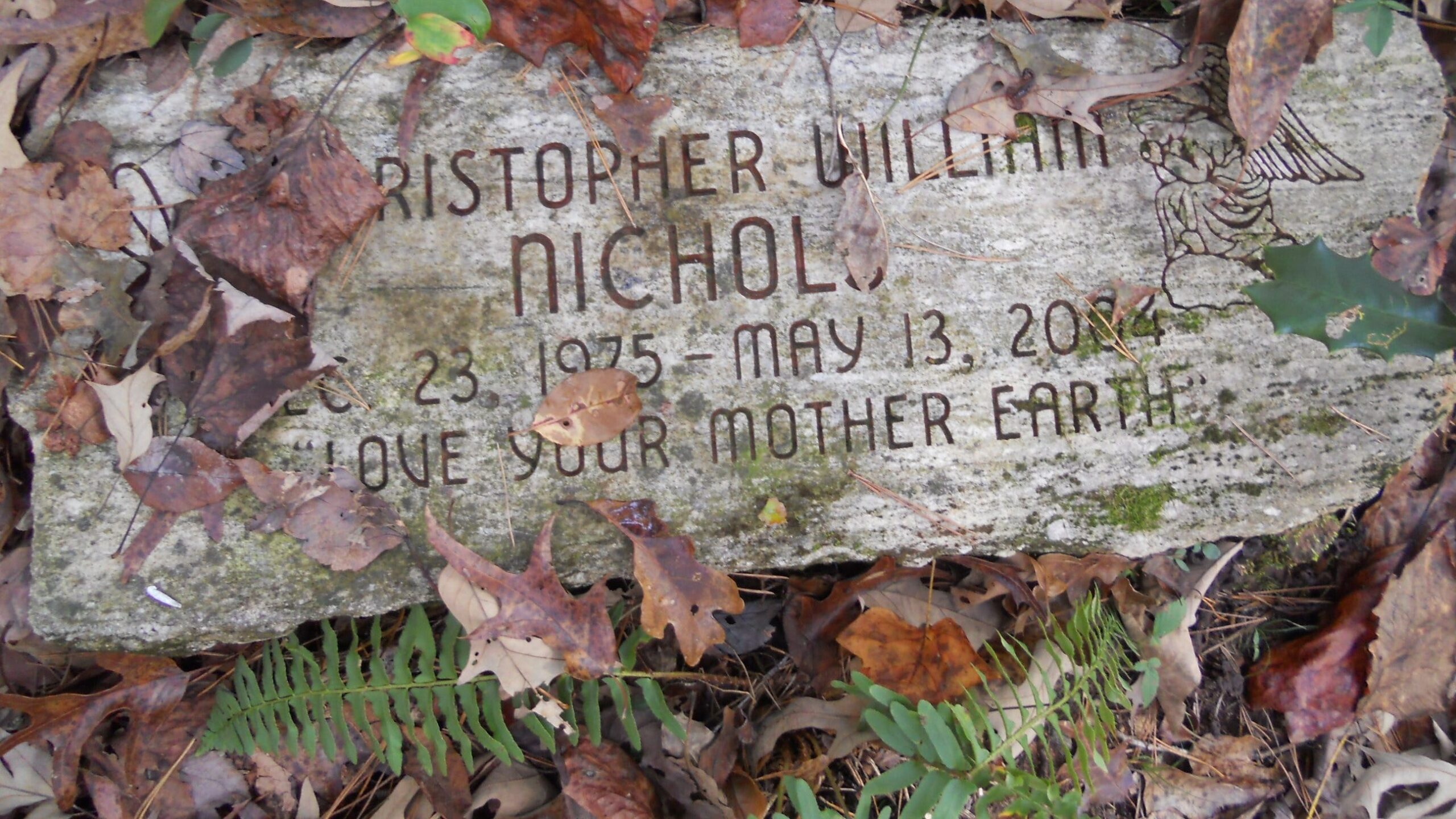
At Ramsey Creek, graves are scattered throughout the woods. They’re so unobtrusive, it’s easy to miss them as you walk past. The markers are flat, irregularly shaped stones, often chiseled from rocks unearthed on the property. Native wildflowers and ferns are the only plantings.
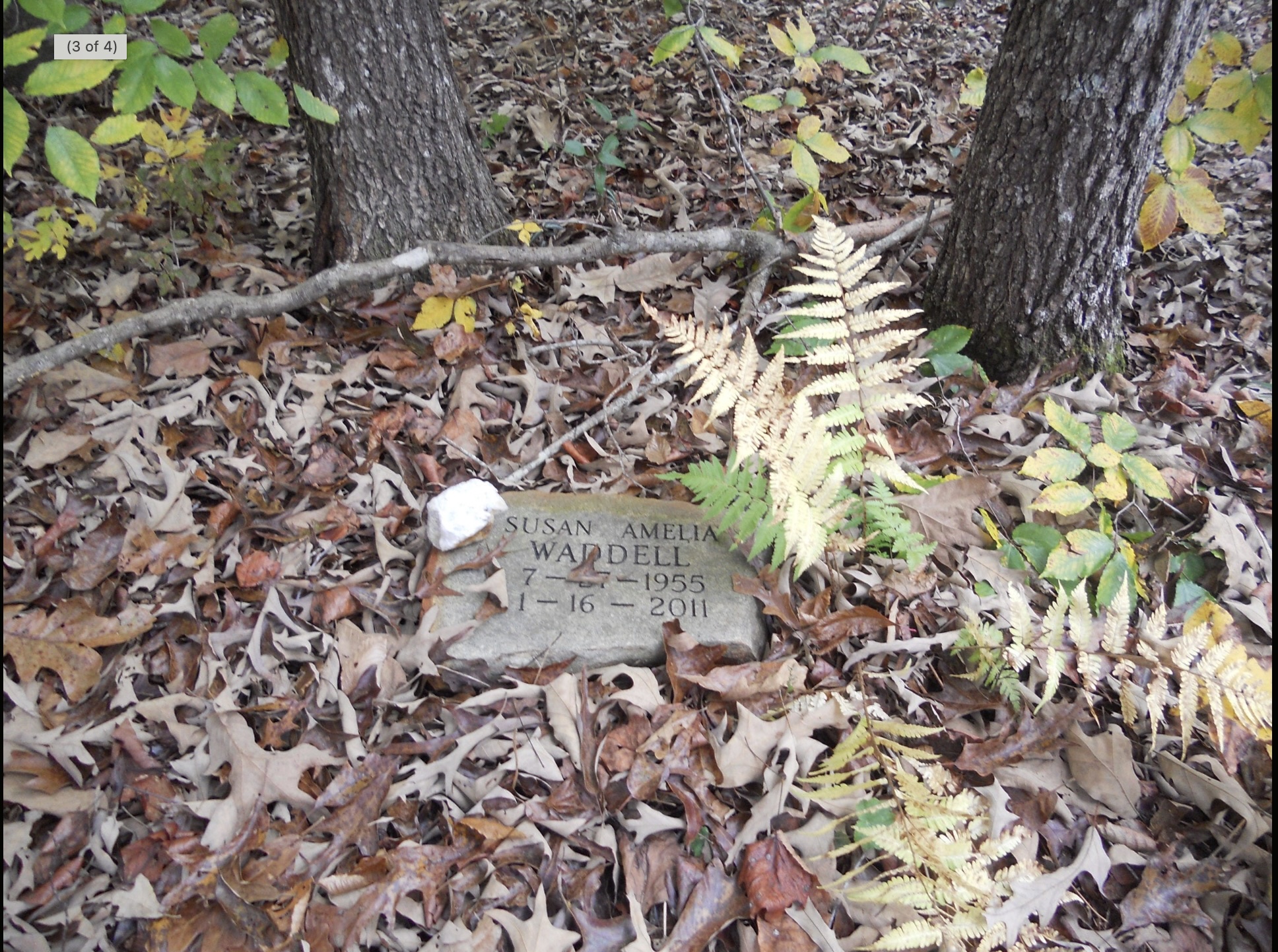
Photo Credit: Jeanne Malmgren/jeannemalmgren.substack.com
Billy describes their careful, step-by-step process of creating a natural burial site:
“First we rescue any plants at the site. Then, as we hand-dig the hole, we save the soil layers: the root mat/duff layer, then topsoil and finally subsoil clay. After the burial, we’re ready to refill the hole. The separated layers are put back, in reverse order, and finally we replant the plants that were rescued before we dug.”
In their ongoing mission to preserve native plants, the Campbells purchased an adjoining 38 acres. In that section, they’re working with the U.S. Fish and Wildlife Service on restoration of a grassland, featuring the endangered Echinacea laevigata.
Even if you’re not visiting the resting place of a loved one, the trails at Ramsey Creek Preserve offer a pleasant walk amid a variety of native habitats. You’ll wander through mixed hardwoods, bottomland understories next to the creek, bogs/seepages, and meadow/savannah areas. In 1998, Dr. L.L. Gaddy conducted a botanical inventory of the entire site. It has since been added to, for a total of between 300 and 400 vascular species. The Campbells’ website offers details, plus a botanical portrait gallery.
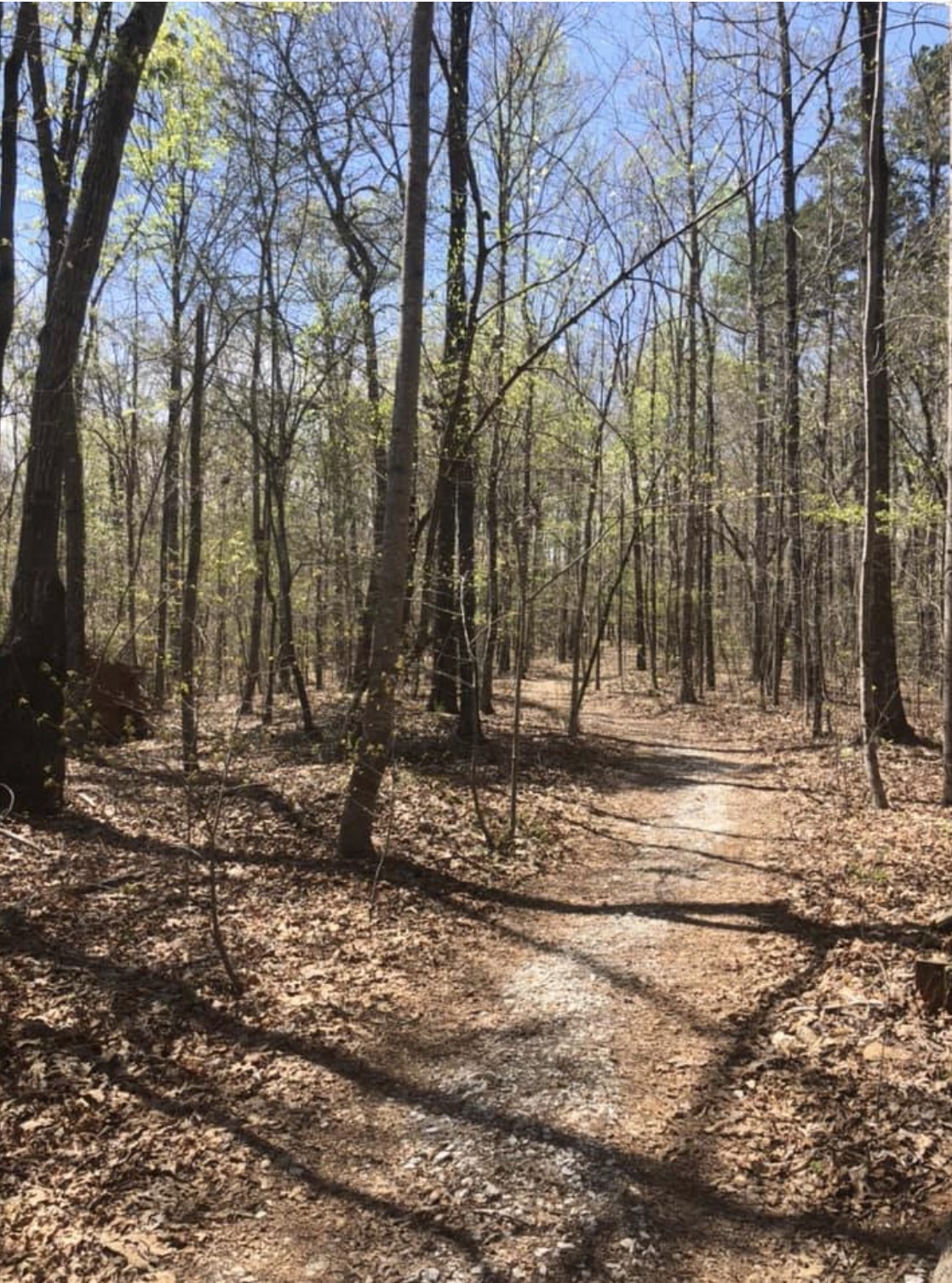
Photo Credit: Billy and Kimberley Campbell
When prompted, Billy can tick off a sampler of species commonly found at the preserve.
“In the woods, we have many native ferns, wild ginger, black cohosh, Acer leucoderm, and trilliums (where appropriate) that we rescue from the trails. In lower areas, it’s Trillium discolor and T. rugelii, also T. cuneatum and T. catesbae.
“In the meadows, we have various native grasses including andropogons, Aristida, little bluestem (Schizachyrium scoparium), as well as various asters, milkweeds, baptisias, Manfreda, Pycnanthemum, Trichostema dichotomum, Polygonatum (also in the woods), Maianthemum, and Eryngium yuccifolium. We also have lots of Liatris spicata, grown from seeds we gathered locally at road cuts and other disturbed sites.”
Ramsey Creek Preserve is now home to 900 burials—both cremated remains and whole body. If you might be interested in visiting to choose your own burial site, here is my story of doing just that.
The preserve is also open to general visits, dawn to dusk every day. Keep in mind that if a funeral or other event is in progress, the chapel and some areas may be inaccessible. There will be signs at the entrance.