
Annonaceae
pawpaw
Asimina triloba
Synonyms
Annona triloba
Asimina virginiana
Porcelia triloba
Orchidocarpum arietinum
Uvaria triloba
Other Common Names
common pawpaw
Indian banana
wild banana
custard apple
Plant Type
Small Tree/Large Shrub (10-25 ft)
Life Cycle
Perennial
Typical Size
15-30 ft. tall
15-30 ft. wide
Tolerant of
Deer, Occasional Flooding
Inolerant of
Poorly Drained Soil
Propagation
By seed
Plant Propagation Notes
Seeds should be collected from mature fruit in autumn after they’ve fallen onto the ground. Wash fruit pulp off seeds. Bury seeds 1in deep in a pot of soil. Cold stratify by placing seeded pot into a refrigerator for 60-90 days. Once removed, seeds will germinate after about 60 days. Alternatively, sow seeds outdoors in a shady area in autumn for natural cold stratification.
Plant Planting Notes
Multiple trees are needed for sufficient pollination for fruit production. Although pawpaw do well in all light conditions, plant trees in a sunny location if fruit is desired. Pawpaw roots may set out suckers.
Plants/Diseases
Pawpaw rarely succumb to serious pests or disease, though many birds and mammals will enjoy the fruit. Caterpillars eat pawpaw leaves but rarely cause significant harm. Pawpaw peduncle borer larvae can harm flowers by burrowing into the flower stalk. Pawpaw living in humid conditions may be infected by the fungal disease bordered leaf spot (Phyllosticta asiminae) which can causes black spots and fruit cracking.
Wildlife Benefits
Nectar/pollen source for pollinating insects, Host plant for butterfly larvae, Fruit/seeds for birds, Supports numerous caterpillars (bird food)
Leaves
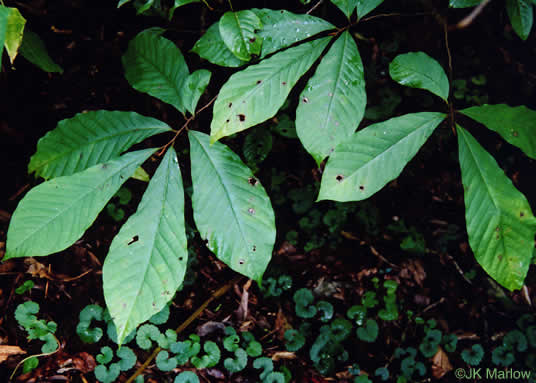
Simple, alternate, oblong, hairless, with smooth edges. Leaves smell like green pepper when crushed.
Flowers
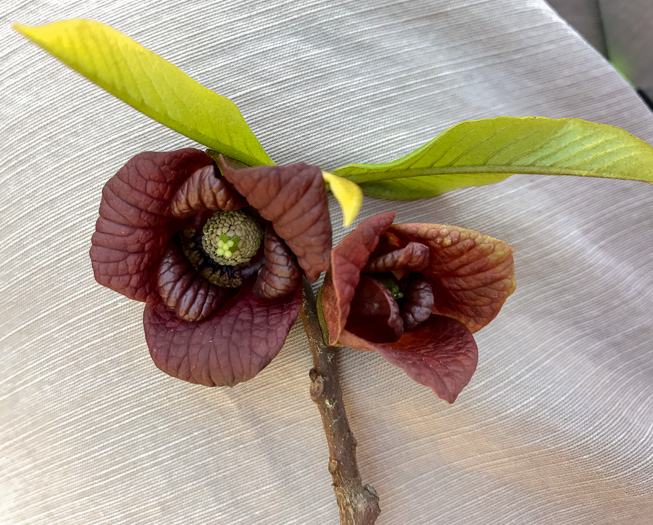
Deep purple, copper, or burgundy with 6 petals.
Fruit
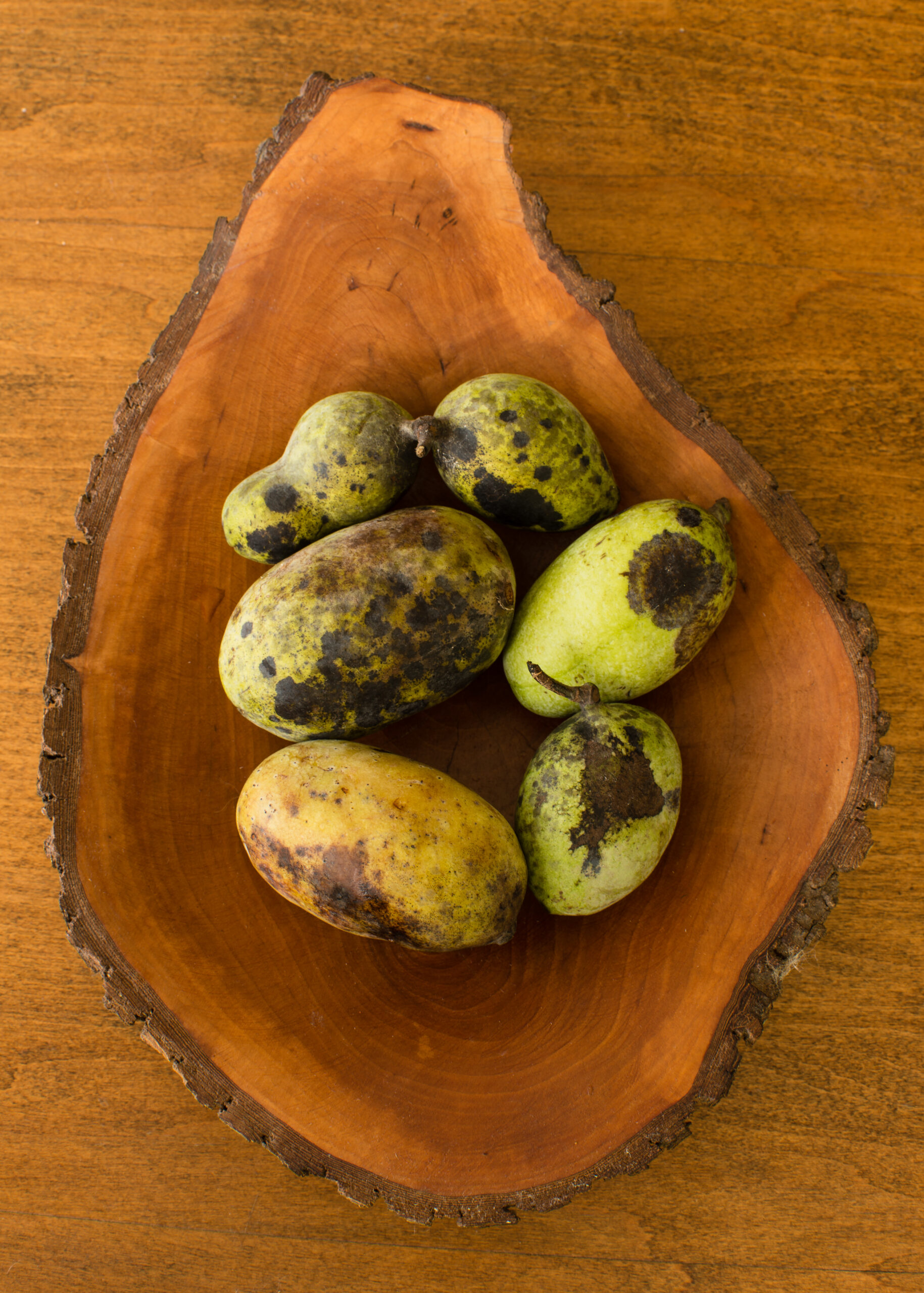
Green, yellow, then brown when ripe. Large, >3in, fleshy, and smooth. Taste similar to bananas.
Bark
Light brown or gray. Smooth with lenticels.
Toxicity
Low severity toxin. Acetogenins may cause skin irritation and/or intestinal pain in some people.
Edibility
Fruits are edible but may cause digestive upset for some people. Do not consume leaves or stems.
Ethnobotanical Use
Native Americans and European settlers ate pawpaw fruit. Fruit can be eaten raw, turned into jams, dried, or baked into cakes.
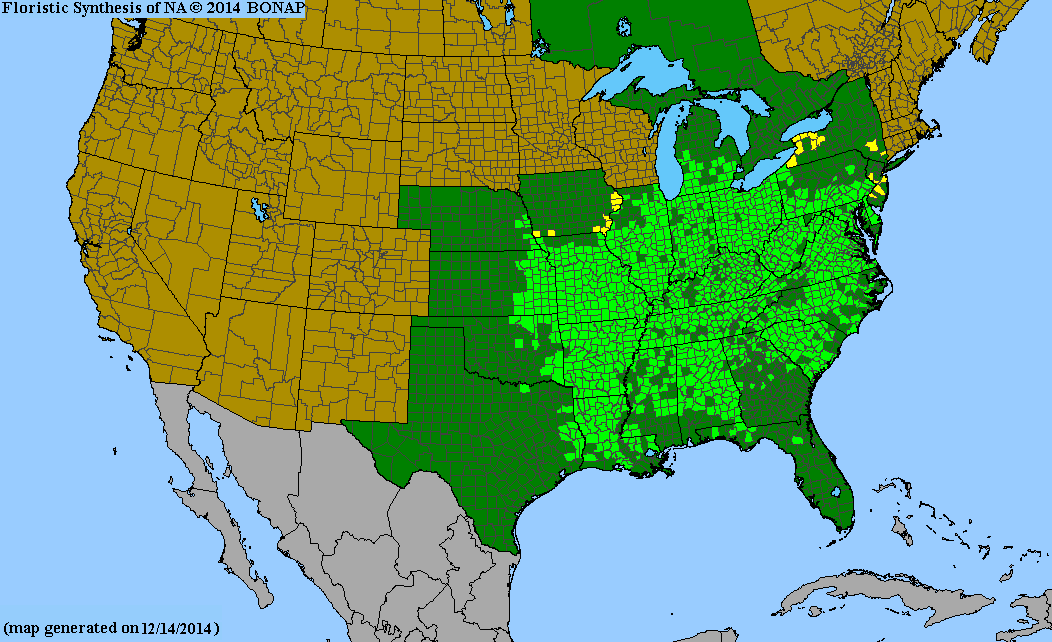
USDA Hardiness Zones
5, 6, 7, 8, 9
Light Exposure
Full Sun, Part Sun/Shade, Full Shade
Soil Moisture
Medium, Moist
Soil Drainage
Well-drained
Soil pH
Acidic (less than 6.0)
Native in South Carolina?
Yes
Plant Native Habitat
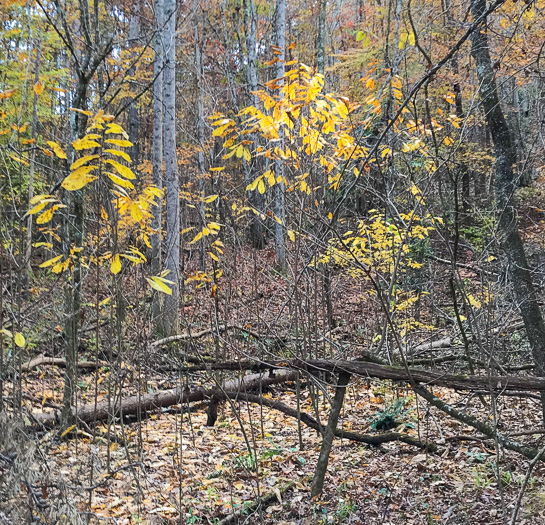
Fertile and moist forest understory in flood plains and bottomlands.
Global Conservation Status (NatureServe)
Secure (G5)
Federal Conservation Status (USFWS)
Not Listed
Distribution Notes
Pawpaw is common in the Coastal Plain, common in the Piedmont, and common in the Mountains.