
Apocynaceae
clasping milkweed
Asclepias amplexicaulis
Other Common Names
sand milkweed
Plant Type
Herbaceous Wildflower
Life Cycle
Perennial
Typical Size
1-4 ft. tall
2-3 ft. wide
Tolerant of
Drought
Inolerant of
Poorly Drained Soil
Propagation
By seed
Plant Propagation Notes
Specific information on this species is sparce, but
Plants/Diseases
No known issues.
Wildlife Benefits
Nectar/pollen source for pollinating insects, Host plant for butterfly larvae
Leaves
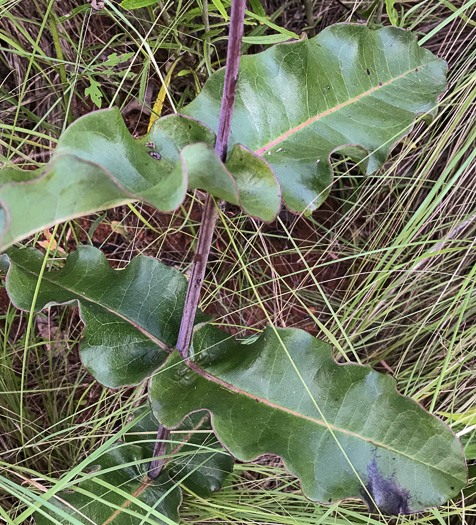
The large, simple, and opposite leaves lack petioles and clasp the stem at the base. Margins ruffled.
Flowers
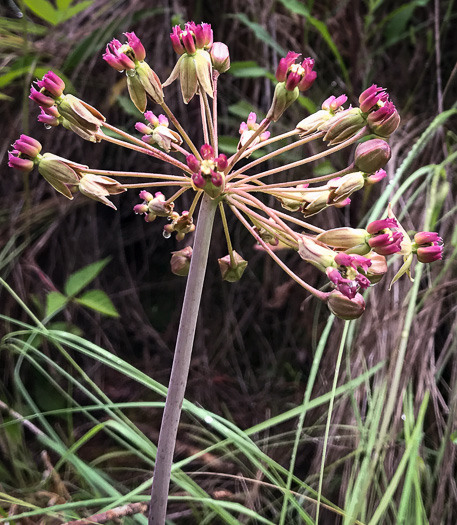
Purple maroon flowers that are radially symmetrical and arranged on an umbel. Fragrant.
Fruit
Large spindle-shaped follicle that splits to release flat brown oval shaped-seeds that are wind dispersed.
Toxicity
All parts of the plant contain low level toxins and should not be consumed.
USDA Hardiness Zones
3, 4, 5, 6, 7, 8, 9
Light Exposure
Full Sun
Soil Moisture
Dry, Medium
Soil Drainage
Well-drained
Native in South Carolina?
Yes
Plant Native Habitat
A variety of habitats with sandy soil including long leaf pine sandhills, barrens, prairies, and dry woodlands.
Global Conservation Status (NatureServe)
Secure (G5)
Federal Conservation Status (USFWS)
Not Listed
Distribution Notes
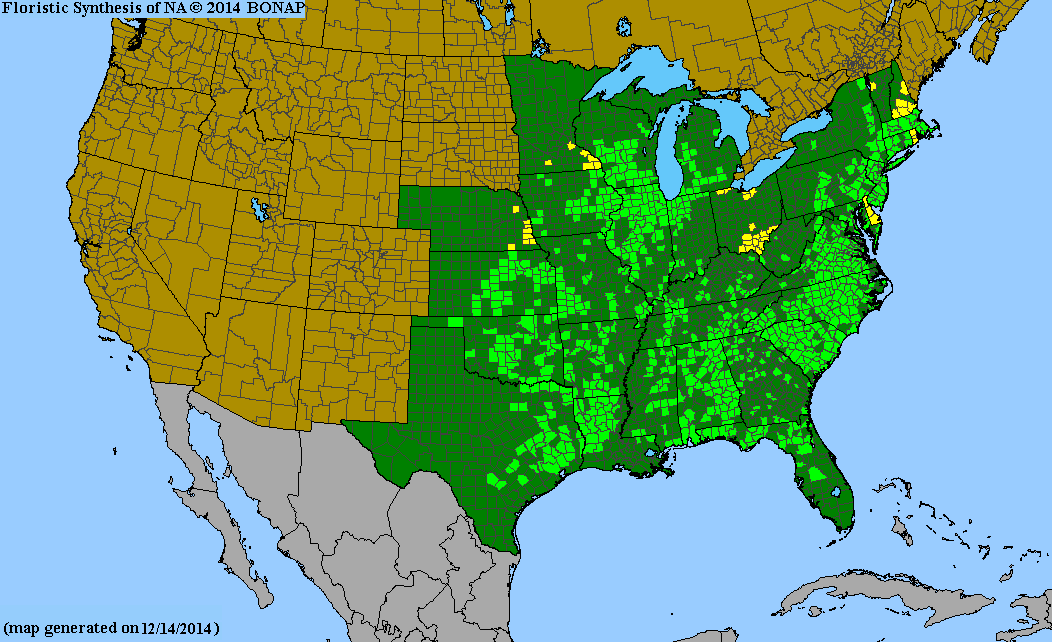
Common in the coastal plain and piedmont. Uncommon in the mountains.