
Poaceae
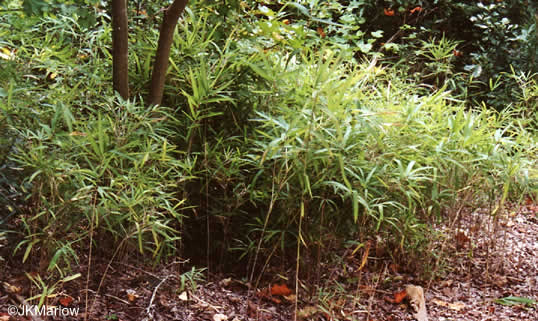
giant cane
Arundinaria gigantea
Synonyms
Arundinaria macrosperma
Other Common Names
river cane
Plant Type
Grass/Grass-like
Life Cycle
Perennial
Typical Size
4-25 ft. tall
8-20 ft. wide
Tolerant of
Occasional Flooding
Inolerant of
Dry Soil
Propagation
By division
Plants/Diseases
Occasionally contracts rust and leaf spots.
Wildlife Benefits
Host plant for butterfly larvae, Fruit/seeds for birds, Supports numerous caterpillars (bird food)
Leaves
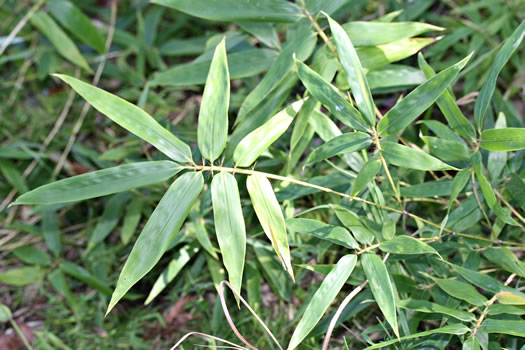
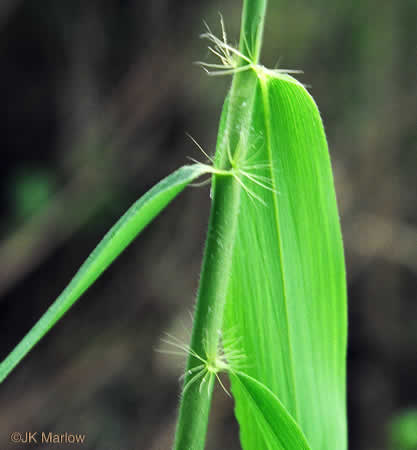
Simple alternate lanceolate sheaths with entire margins.
Flowers
Inconspicuous and rare.
Fruit
Caryopsis.
Toxicity
No known toxicity.
USDA Hardiness Zones
5, 6, 7, 8, 9
Light Exposure
Full Sun, Part Sun/Shade, Full Shade
Soil Moisture
Moist
Soil Drainage
Well-drained, Poorly Drained
Native in South Carolina?
Yes
Plant Native Habitat
Riparian forests, bottomland forests, stream banks, and seeps.
Global Conservation Status (NatureServe)
Secure (G5)
Federal Conservation Status (USFWS)
Not Listed
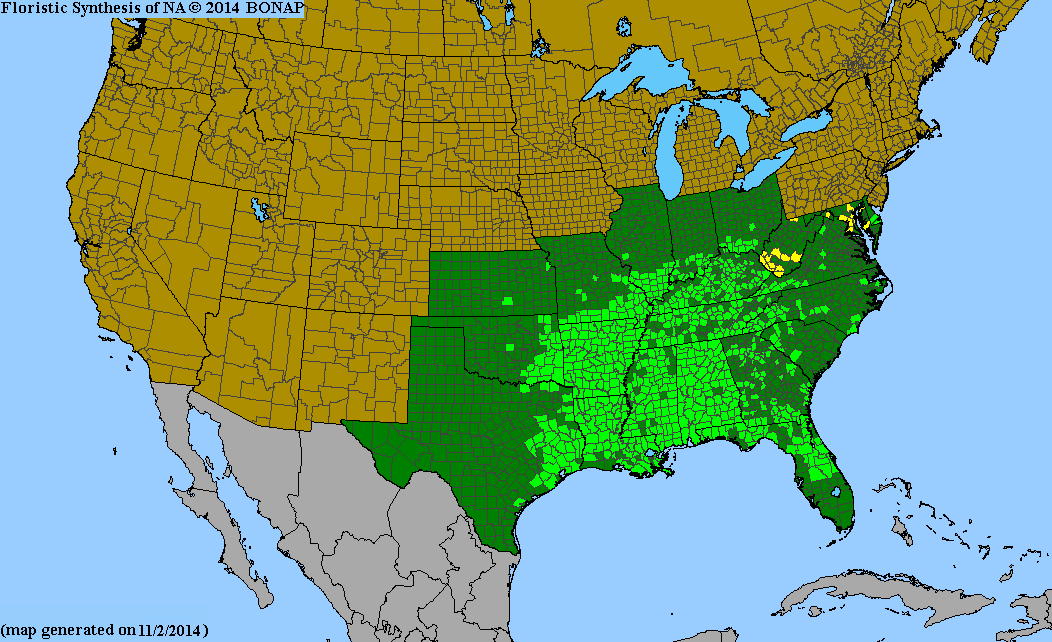
Distribution Notes
Rare in the coastal plain. Uncommon in the piedmont. Common in the mountains.