
Rosaceae
black chokeberry
Aronia melanocarpa
Synonyms
Aronia nigra
Photinia melanocarpa
Pyrus melanocarpa
Sorbus melanocarpa
Plant Type
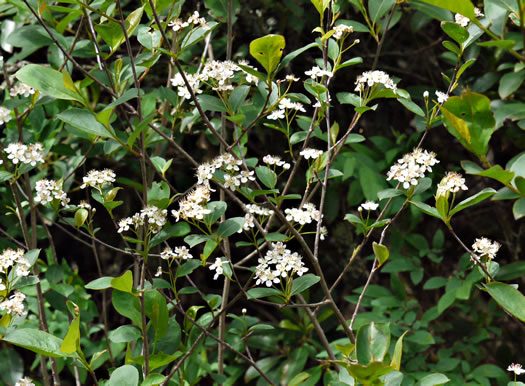
Small Tree/Large Shrub (10-25 ft)
Life Cycle
Perennial
Typical Size
3-10 ft. tall
3-6 ft. wide
Tolerant of
Occasional Flooding
Propagation
By seed, By cutting
Plant Propagation Notes
Softwood cuttings will root without rooting hormone. Seeds require cold moist stratification for at least 120 days.
Plants/Diseases
No significant pest or disease issues.
Wildlife Benefits
Nectar/pollen source for pollinating insects, Fruit/seeds for birds
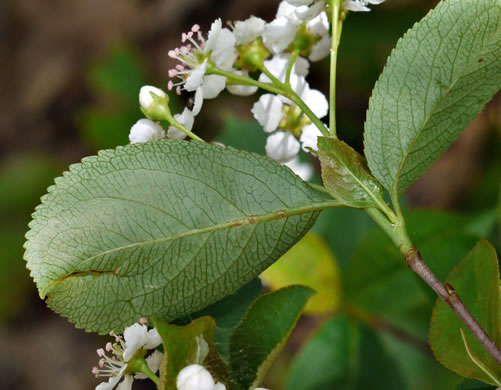
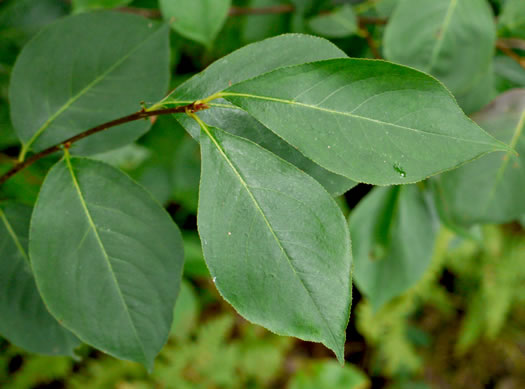
Leaves
simple, elliptic to ovate leaves that are alternate and have finely serrated margins.
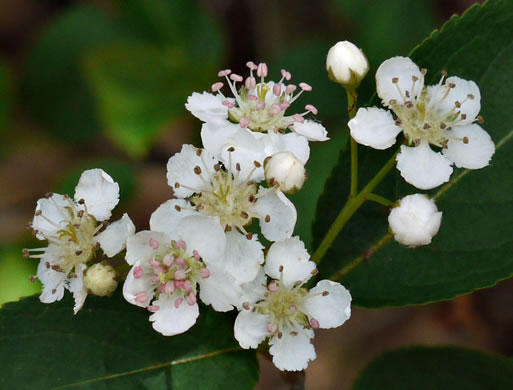
Flowers
Small 1/3″ flowers that can be white to light pink and have 4-5 petals.
Fruit
Dark purple to black pomes.
Bark
Dark brown maturing to dark grey.
Toxicity
No known toxicity.
Edibility
Fruits are edible.
USDA Hardiness Zones
3, 4, 5, 6, 7, 8
Light Exposure
Full Sun, Part Sun/Shade
Soil Moisture
Moist
Soil Drainage
Well-drained, Poorly Drained
Soil pH
Acidic (less than 6.0), Neutral (6.0-8.0), Basic (greater than 8.0)
Native in South Carolina?
Yes
Plant Native Habitat
In the mountains; balds, forests, and openings and exposed rock outcrops at high elevations, bogs. In the coastal plain and piedmont; seeps and headwater wetlands.
Global Conservation Status (NatureServe)
Secure (G5)
Federal Conservation Status (USFWS)
Not Listed
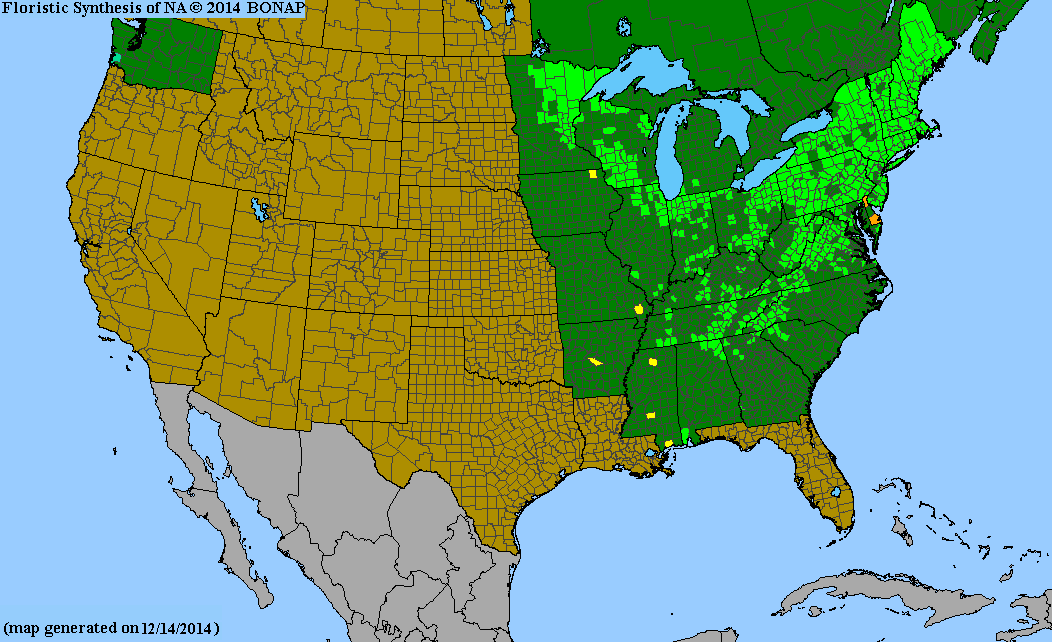
Distribution Notes
Rare in the piedmont. Uncommon in the mountains. Absent in the costal plain.