
Sapindaceae
painted buckeye
Aesculus sylvatica
Synonyms
Aesculus neglecta
Aesculus georgiana
Plant Type
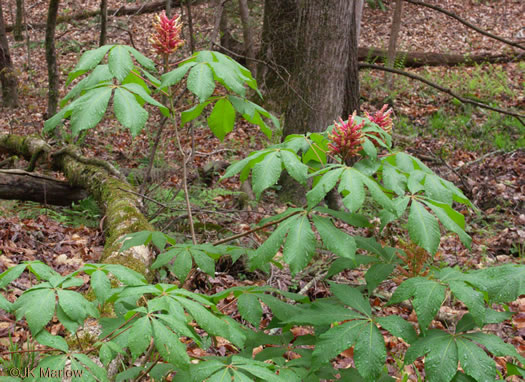
Small Tree/Large Shrub (10-25 ft)
Life Cycle
Perennial
Typical Size
10-20 ft. tall
6-15 ft. wide
Tolerant of
Deer, Occasional Flooding
Inolerant of
Poorly Drained Soil
Propagation
By seed
Plant Propagation Notes
Seed should be collected in late summer to early fall when the capsule begin to split. Seeds should be cold moist stratified or planted outside in fall for spring germination.
Plants/Diseases
Plants may be susceptible to powdery mildew, rust, and anthracnose, bagworms, Japanese beetles and borers. Leaf scorch may happen in severe drought or high wind exposure.
Wildlife Benefits
Nectar/pollen source for pollinating insects, Nectar source for hummingbirds
Leaves
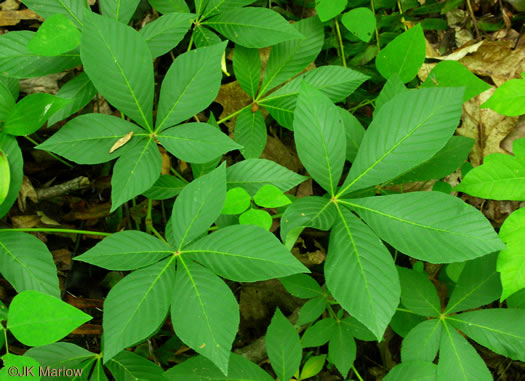
Opposite, palmately compound leaves with five leaflets.
Flowers
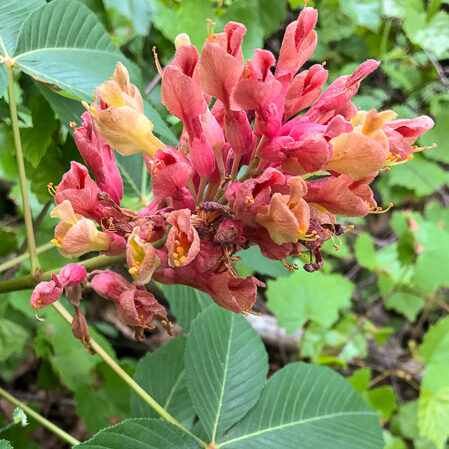
The 1 inch tube-shaped flowers are found on panicles 5-8 inches long and may be yellow to orange or even red.
Fruit
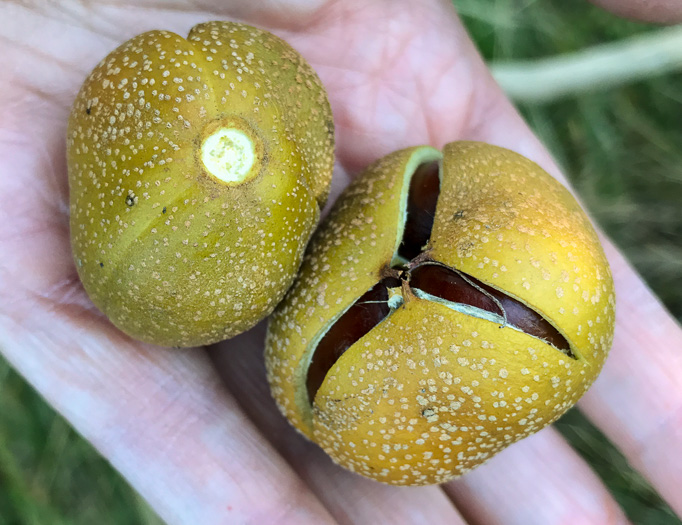
Capsules with 1-3 large brown seeds.
Bark
New shoots are a brown to copper color and then mature to silver/grey.
Toxicity
All parts of this plant are toxic and should not be consumed by humans or pets.
USDA Hardiness Zones
6, 7, 8
Light Exposure
Full Sun, Part Sun/Shade
Soil Moisture
Moist
Soil Drainage
Poorly Drained
Native in South Carolina?
Yes
Plant Native Habitat
Nutrient-rich forests, on bottomlands, lower slopes, and in ravines, floodplains of brown water rivers. Only found at low elevations in the mountains.
Global Conservation Status (NatureServe)
Secure (G5)
Federal Conservation Status (USFWS)
Not Listed
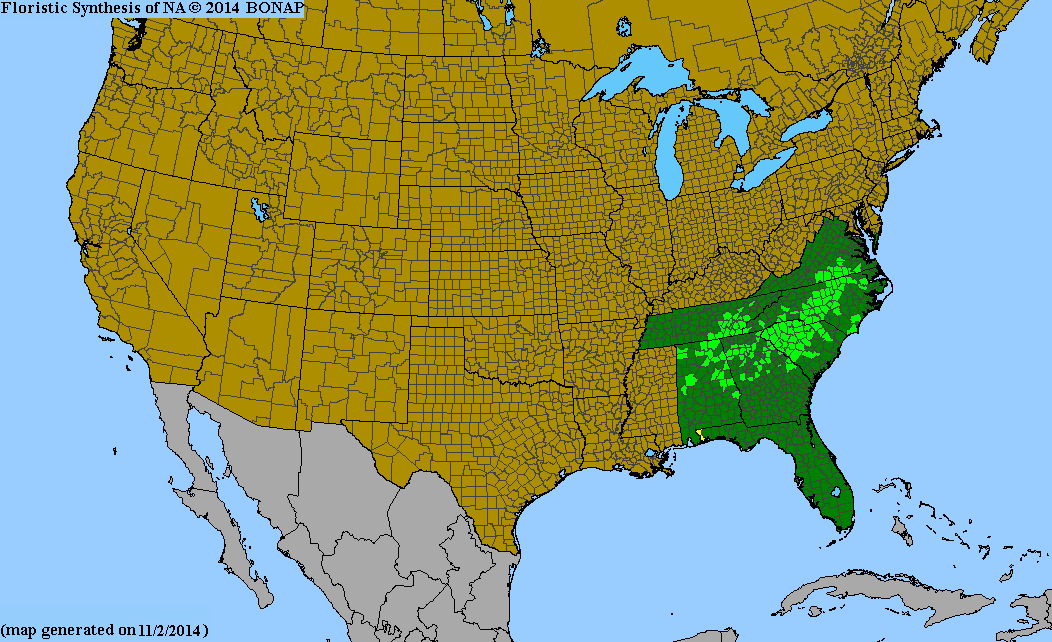
Distribution Notes
Rare in the mountains and coastal plain. Common in the piedmont.