
Sapindaceae
yellow buckeye
Aesculus flava
Synonyms
Aesculus octandra
Other Common Names
sweet buckeye
Plant Type
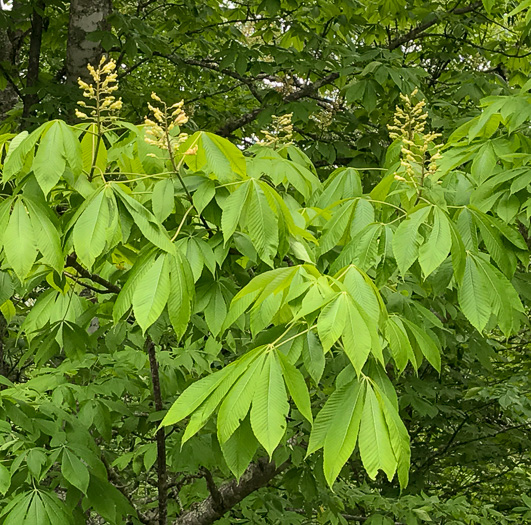
Large Tree (greater than 25 ft)
Life Cycle
Perennial
Typical Size
40-60 ft. tall
30-40 ft. wide
Tolerant of
Occasional Flooding
Inolerant of
Dry Soil, Poorly Drained Soil
Propagation
By seed
Plant Propagation Notes
Cold moist stratification for 120 days.
Plants/Diseases
Occasionally buckeye lacebug, Japanese beetles, bagworms, and borers can cause leaf damage. Less susceptible to foliar diseases than other species. Can experience leaf scorch in windy conditions.
Wildlife Benefits
Nectar/pollen source for pollinating insects, Nectar source for hummingbirds
Leaves
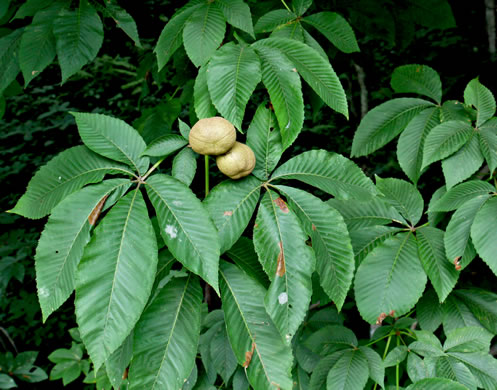
Palmately compound, opposite leaves.
Flowers
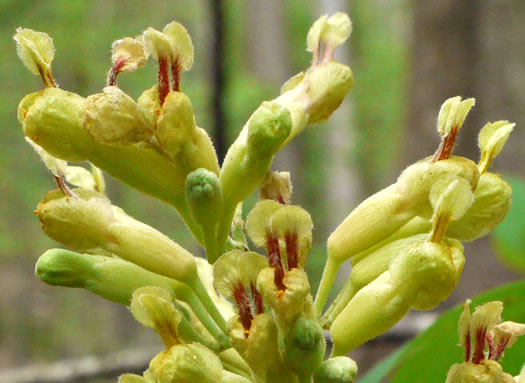
Green/yellow and red tube-shaped flowers on panicles.
Fruit
One to three brown nuts inside a smooth, leathery capsule.
Bark
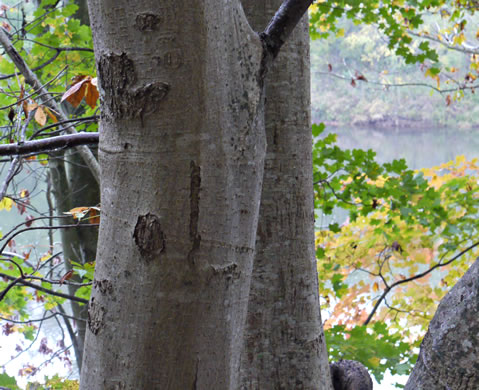
Smooth light brown bark matures to grey scaly bark.
Toxicity
All parts of this plant is toxic to humans and pets and should not be consumed.
USDA Hardiness Zones
3, 4, 5, 6, 7, 8
Light Exposure
Part Sun/Shade
Soil Moisture
Moist
Soil Drainage
Well-drained
Soil pH
Acidic (less than 6.0), Neutral (6.0-8.0)
Native in South Carolina?
Yes
Plant Native Habitat
Moist forests, especially prominent in seepy cove forests such as mountain hollows, ravines, and stream valleys.
Global Conservation Status (NatureServe)
Secure (G5)
Federal Conservation Status (USFWS)
Not Listed
Distribution Notes
Common in the mountains, rare in the piedmont, absent from the coastal plain.