
Asclepiadaceae
redring milkweed
Asclepias variegata
Synonyms
Biventraria variegata
Other Common Names
white milkweed, variegated milkweed
Plant Type
Herbaceous Wildflower
Life Cycle
Perennial
Typical Size
1-3 ft. tall
1-3 ft. wide
Tolerant of
Deer, Drought
Propagation
By seed
Plant Propagation Notes
Either plant in fall or winter or cold-stratify before planting in spring. May be more difficult to germinate than other milkweeds.
Plant Planting Notes
1ft spacing
Plants/Diseases
Aphids, milkweed beetles, and caterpillars are common but not problematic. Milkweed bugs can damage seed pods.
Wildlife Benefits
Nectar/pollen source for pollinating insects, Host plant for butterfly larvae
Leaves
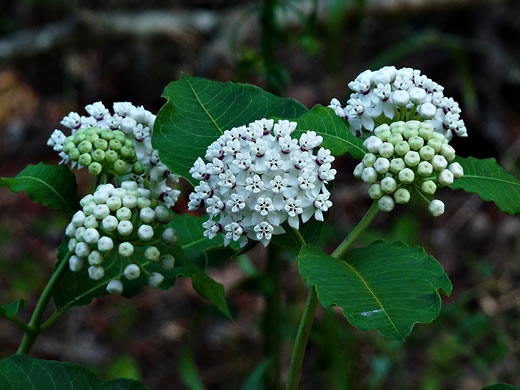
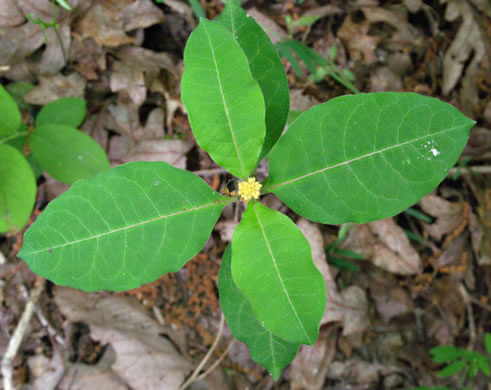
Opposite oval-shaped leaves. Smooth, dark green on top with lighter-colored hairy undersides.
Flowers
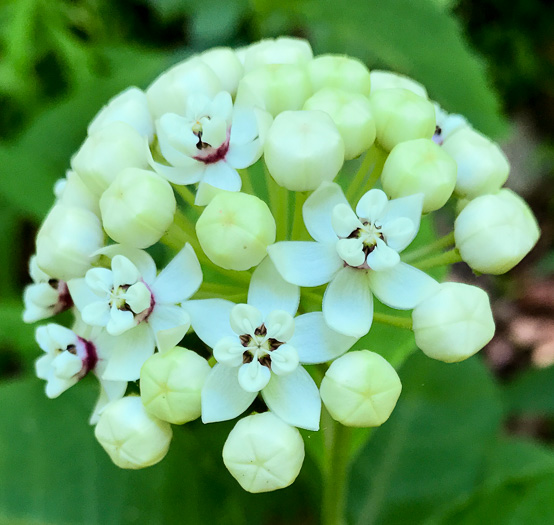
Spherical clusters of white waxy flowers with a red/purple ring
Fruit
Spear-shaped pods containing seeds
Bark
Stout, unbranched, green stems that leak milky sap when damaged.
Toxicity
All plant parts can be mildly toxic due to cardiac glycosides
USDA Hardiness Zones
3, 4, 5, 6, 7, 8, 9
Light Exposure
Full Sun, Part Sun/Shade
Soil Moisture
Dry, Medium
Soil Drainage
Well-drained
Native in South Carolina?
Yes
Plant Native Habitat
Upland forests, woodland edge, slopes
Global Conservation Status (NatureServe)
Secure (G5)
Federal Conservation Status (USFWS)
Not Listed
Distribution Notes
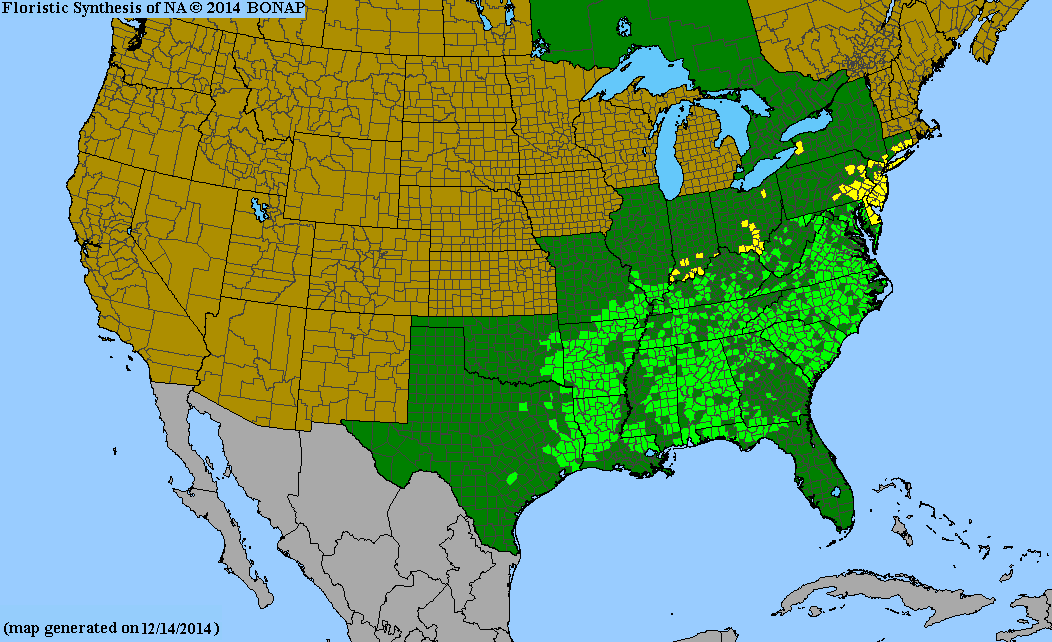
Redring milkweed is common in the coastal plain, pediment, and mountains.